

OFF THE SHELF: SEPTEMBER 2026
OFF THE SHELF: MAY 2026

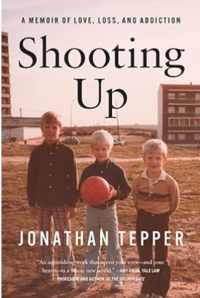
Shooting Up by Jonathan Tepper (Constable, 2026)
Young boy, three brothers, unswerving missionary parents and their Protestant, evangelical flag hoisted in a notorious heroin den neighbourhood on the edge of Madrid, called San Blas. This was the 1980s. The narrative is fast and frank, authentic and touching; the author (Christ Church, 1998) is skilled at capturing the bewildering reality of being haplessly the minor actor in a drama not of his choosing, he being the young boy. The requirement to spend every spare minute traipsing around rehab centres in Spain, to have to fidget away hours whilst the adults talk distantly, reading Encyclopedia Britannica for fun and banking vast swathes of scripture, because of near-constant ‘devotionals’ – the daily business of prayer and communal worship. Across the wider memoir rages a rich cast of drug addicts, asymmetrical friendships and dusty football. Emerging at the middle is the devastation of AIDS and countless deaths, the result of shared needles. There is a relieving sense of humour, such as when a visiting American missionary addressed a large audience of reforming and ex-drug addicts, most with formidable criminal records. The missionary wanted everyone’s spirits to be free ‘like butterflies’ but Jonathan’s father Elliott mistakenly used the Spanish word marica (queer) instead of the correct mariposa (butterfly). The audience laughed and the missionary perked up thinking he’d animated them, and the error was repeated to even greater uproar. By and large, the narrative here is bright rather than noir, measured rather than ironic, and ultimately when it comes to the return to the USA for a conventional college education, Jonathan was a fish out of water, wildly ahead of his tame classmates for harsh worldly realities but crippled for ordinary socialising. He doesn’t need to put on a rhetorical spin because the actual biography is so striking. Books were Jonathan’s lifeline up and out, like a golden braid, and team Tepper knew no doubt, the father with a top education himself. Jonathan and two of his brothers went to Oxford, and Jonathan’s recounting of his successful interview process for a Rhodes scholarship is spellbinding.
Questions abound. Elliott had originally fallen through a shop window on account of taking LSD, or was it a divine encounter as he insisted? He was a dreamer. Later, inspired by the movie about C S Lewis, Shadowlands, Jonathan reveals himself also a dreamer. The thing is, dreams can be made true and some were. Jonathan became a Rhodes Scholar. Elliott’s ministry continues to this day and the organisation he founded, Betel, is now a national success in Spain. But there is a price to pay, always. Shooting Up presents numerous questions ultimately unanswered, such as what a ‘normal’ upbringing is, or to what extent conformity matters, or is even desirable. There is a welling nostalgia too for those Peace Corps days when Americans abroad were all symbols of hope and goodness, pre-smart phone and internet, pre-Facebook and digital distraction. The sense of a standoff becomes an accommodation: ‘My parents might be strange, but there was nobility in the struggle to help others,’ he reasons as his peer group at Chapel Hill crowd him with intrusive questions. There is less resolution with the ‘bittersweet experience’ of education, because it chipped away at Jonathan’s Christian identity. He cites King Solomon: ‘For in much wisdom is much grief: and he that increases knowledge increases sorrow.’ The detail is suggested rather than explored, along with other coming of age dilemmas. Meanwhile, we find out at the end that while San Blas was bulldozed, drugs never disappeared. His now widowed father still devotes his life to Betel at 79. You look at the photograph of the three brothers graduating in their sub fusc outside the Radcliffe Camera in Oxford, and you’d never guess what incredible experience lies behind the formal visage of the clothing, or the colossal grief surrounding the missing fourth brother, Timothy, whose loss hovers over the book. One is ultimately left to parse that tempestuous enigma, ‘God hath chosen the foolish things of the world to confound the wise; and God hath chosen the weak things of the world to confound the things which are mighty.’

What Is Immigration Policy For? By Madeleine Sumption (Bristol University Press, 2026)
We are reminded that until ships, cars and aircraft came along, it was nearly impossible to move very far from one’s locality, and slow and cumbersome even if you were wealthy and elite. Fast forward to 2026 and migration is a hot topic. After much explanation, Sumption reasons that we are all a bit confounded by the subject once we get beyond cheap sloganeering. ‘In other words,’ says the author, ‘many citizens want something impossible: liberal immigration policies that deliver low migration.’ She adds that while this might be possible in undesirable destinations, it is impossible in ‘sought-after high-income countries like the UK, US or Australia’. This reasoning follows a remarkable piece of data showing the result of a huge international survey, suggesting that the number of people who say they would like to move to Canada would outstrip the entire population of the country. Similar, almost inconceivably massive numbers of would-be immigrants register their intention to move to other wealthy nations such as the UK and Australia. It’s not illiberal or immoral to think that migration in the global age requires careful management, hence the title and emphasis on ‘immigration policy’ and ‘immigration policy makers’.
Sumption, who is Director of the politically impartial, evidence-based Oxford University Migration Observatory, says early on that immigration policy is not a simple Right vs Left political issue. The patriotic anti-immigrant lobby comes unstuck on seasonal fruit pickers, without whom British farmers would falter; the NHS is a conundrum because it relies so heavily on international migrant workers and not just nurses and doctors. International students are a central source of financing for British universities. For liberals who are uncomfortable with harsh policies, Sumption casts scepticism on their economic argument in favour of migration. The data suggests that the lifetime costs of immigrants to their host societies typically outweighs their contributions in the form of taxes. She reminds us that competence in government is much underestimated, and in short supply in the UK. For example, successive Conservative governments 2010-24 promised to reduce immigration. It trebled under the Boris Johnson administration. Why is it, she asks, that Norway can call down perfect data sets on immigration while the UK barely has any idea who is coming and going?
She is also clear that race and racism is one element in the mix of attitudes towards immigrants, but not the only one. Another element is former colonial ties, whether Indians in the UK, Algerians and Moroccans in France or Colombians and Venezuelans in Spain. The British-Sri Lankan novelist Ambalavaner Sivanandan famously said, ‘[W]e are here because you were there.’
The United Arab Emirates comprises 90% immigrants but they are wildly unequal, some being rich and privileged, many more a semi-indentured underclass of service providers. Japan is an outlier with just 2% of its population immigrants. Most of the 3.5% of the global population who are migrants are not in OECD countries but low and middle-income territories, yet as a portion of the population they are more numerous in the wealthier countries owing to their smaller populations.
The book abounds in beautifully concise box-outs with explainers. Sumption’s own position is offered on p15. She says that you don’t have to identify as liberal or sceptical: ‘intellectually coherent policy positions exist that combine liberal and restrictive preferences on different types of migration.’ She suggests that aspects of the Refugee Convention are overdue reform, the world having overtaken some of their founding assumptions.
The book is part of a series by Bristol University Press offering current thinking on a wide range of dilemma-laden policy areas, from veganism to zoos. Only just out, it demands to be read by anyone who is interested in the realities of immigration as opposed to the cheap political postures. No one will find their imagined position to be as straightforward as they may have assumed.
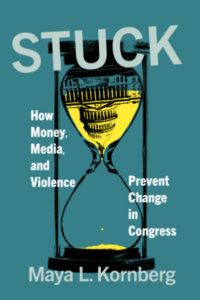
Stuck: How Money, Media, and Violence Prevent Change in Congress by Maya L. Kornberg (Johns Hopkins University Press, March 2026)
Why 50 years of changemaking and reform haven't fixed Congress – and what that reveals about American democracy. The author (Wolfson, 2016) argues that Congress, the central democratic institution in the United States, is hanging on by a thread. On 6 January 2021, a violent attack on the Capitol Building left five people dead, and threats and attacks against politicians are on the rise. In Stuck, Maya Kornberg chronicles the efforts of congressional reformers over the last 50 years and documents the mounting forces that have kept their reforms from creating meaningful change. The 'Watergate babies' of 1974, the Contract with America conservatives of 1994, and the historic 2018 class fuelled by backlash to Donald Trump all represent younger, more diverse, and less entrenched members who arrived in Washington energised and idealistic. Kornberg reveals the ways Congress has become increasingly inhospitable to change. Political violence, astronomical campaign costs, relentless fundraising demands, shrinking staff, and centralised party leadership all constrain the ability of new members to legislate and represent their constituents. Social media, while offering new platforms for political expression, has also heightened harassment and fed a performative culture that rewards spectacle over substance. Bolstered by dozens of interviews, congressional records, and the voices of lawmakers past and present – including Henry Waxman, Toby Moffett, Phil English, Alexandria Ocasio-Cortez, and Lauren Underwood – Stuck offers a sobering portrait of a legislative body paralysed by its own internal dynamics. Kornberg outlines tangible reforms that could restore Congress's capacity to function and amplify the power of its newest members. At a time when Americans are losing faith in democracy's most representative institution, Stuck makes the case for how it could be saved.
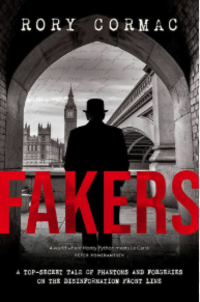
Fakers: A Top-Secret Tale of Phantoms and Forgeries on the Disinformation Front Line by Rory Cormac (Oxford University Press, 14 May 2026)
8,000 files have been declassified and this is the result – Britain did pursue ‘Kremlin style’ tactics, aimed at causing low level havoc, throughout much of the Cold War. The difference, it would appear, was an ever-present nannying Whitehall authority irritated at the louche quality of some of the suggested agitprop by larger than life characters. The men in black suits needed to prove ‘value for money’, and the trouble, argues the author who is a Professor of International Relations at the University of Nottingham and says he had a wonderful time researching this volume, is that you can’t easily do that. ‘This was not about trying to overthrow governments, launch dramatic coups or generate huge policy changes; it was, as various British propagandists had put it with mixed metaphors, a firehose, the drawing of a bow, the shotgun principle. Propaganda and subversion, according to one MI6 vice-chief, were "a continual sapping process".’ The case in point was an attempt to subvert the World Youth Festival of 1968, held in Sofia, Bulgaria. The author is in touch with a sense of humour and the chapter is titled, ‘Send in the Hippies’. That was exactly what the secret team in the attic of the Foreign Office sought to do, with pamphlets soliciting the hard left, free love, drugs – encouraging mayhem that would irritate or even bring down the officially sanctioned intentions of the Soviet-inspired ‘Festival’. First came a fake manifesto from a violent and fictitious student group, that made the case for a sort of nihilistic take-down. This ‘group’ was called the ‘Committee for European Syndicalist Action’. Next, the semi-retired journalist John Rayner (a bit of a legend) reawakened the ‘Loyal African Brothers’, another invention, who attacked Bulgaria for racism; thirdly a brilliant ‘Report’ by a wordy ‘Committee’ that emphasised the Soviet intentions behind the Festival. It was funny and it was fun, as is this whole book; what it ultimately says about British game-playing is for the reader to decide, particularly because some of the actors declared very publicly that nothing like this had ever taken place. Much of the action teetered on farce, most of it was very difficult to track or measure. 1968 was the year of student protest anyway. The Festival in Sofia was a disaster anyway. The levels of intrigue from dozens of countries all throwing their subversive hats into the ring meant that the airwaves were already deafening, the CIA everywhere too. Eventually, from a large budget in the 1950s, the Whitehall suits pushed the special unit (officially the ‘Information Research Department’) down the hill until eventually it was closed in 1977 by then foreign secretary for Labour David Owen, ‘a somewhat arcane, not to say sinister, relic of the Cold War’, falling in the grey space between diplomacy proper and spying proper. Strangely, the whole reads better than an extended Public School jape because it was a very international effort. The number one rule was to do everything to perfection in a local language, and the leader of the unit was an Austrian refugee, Hans Welser. It would be too easy to laugh it off. We should not do so. There was a threat of nuclear war and everything was jangly, not just for the higher suits in the Foreign Office. The shenanigans indulged for three decades from 1947-77 were both supremely British and not British at all. It’s an odd one. Read it and decide for yourself.
move to carousel movement controls
 Pause slideshow
move to carousel content
Pause slideshow
move to carousel content

ELLA BARON
ELLA BARON

THE IMPORTANCE OF VACCINE ADVOCACY
THE IMPORTANCE OF VACCINE ADVOCACY

SILICON VALLEY CAREER TALK
SILICON VALLEY CAREER TALK

DEGREES WORTH IT AFTER ALL
DEGREES WORTH IT AFTER ALL

OFF THE SHELF: AUGUST 2026
OFF THE SHELF: AUGUST 2026

THE RISE OF BACTERIAL RESISTANCE FROM POULTRY FARMS
THE RISE OF BACTERIAL RESISTANCE FROM POULTRY FARMS

NATURAL HISTORY AT OXFORD REVAMPED
NATURAL HISTORY AT OXFORD REVAMPED

OFF THE SHELF: JULY 2026
OFF THE SHELF: JULY 2026
MALACHI MCINTOSH
MALACHI MCINTOSH
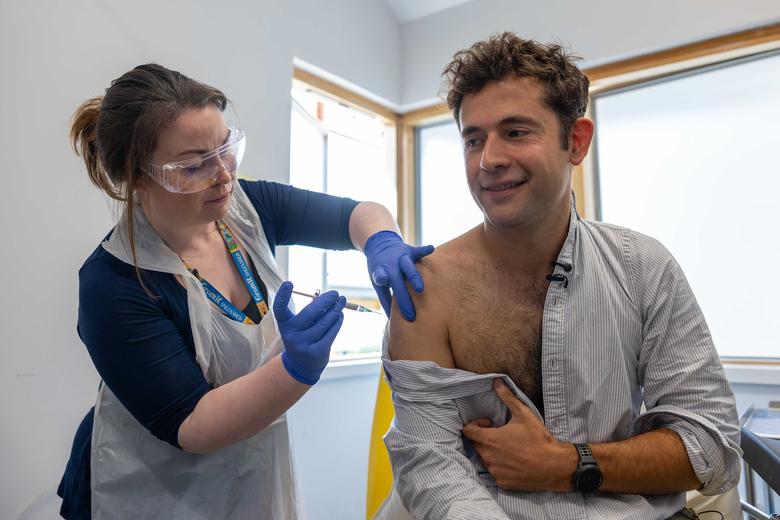
EBOLA: FIRST VACCINATION
EBOLA: FIRST VACCINATION

GRAPPLING WITH THE GHOSTS OF CARIBBEAN COLONIALISM
GRAPPLING WITH THE GHOSTS OF CARIBBEAN COLONIALISM
Pause slideshow

