


SARAH RUDEBECK
‘ARTISTS ARE THE GREAT CONVENORS’
Built to schedule and budget, the Stephen A. Schwarzman Centre for the Humanities flung open its doors last October.
Much visited already, the scale and impact of the Centre are only just beginning to unfold and it is jaw dropping and exciting.
‘It’s not only for the Humanities Division but for the University and the wider community,’ says Professor Dan Grimley, Head of Humanities and Professor of Music at the University of Oxford. ‘It embodies the civic role of the university in the 21st century, and it asks what it means to be human in a time of great anxiety.’
It is also an environmental achievement, the largest Passivhaus university building in Europe and the world’s first Passivhaus concert hall.
For the University, it has brought together seven humanities faculties (English, History, Linguistics Philology and Phonetics, Medieval and Modern Languages, Music, Philosophy, Theology and Religion), plus the Oxford Internet Institute and the Institute for Ethics in AI under a single roof.
There is a new Bodleian Humanities Library on site, offering many books in highest demand for tutorial reading lists, in the model of many open-shelf ‘cross campus’ style libraries at Ivy League institutions, but not replacing the Radcliffe Camera and Taylorian Institute.
This profound reimagining of the University of Oxford is also the reimagining of the function and purpose of a university.
Professor Grimley says: ‘There is so much concern around social cohesion, democratic legitimacy and the environment, but the Schwarzman Centre brings the humanities and the public together, a real step forward for us.’
Enter, stage right: the Cultural Programme, which launches officially on 25 April.
This is brewing up right now, in a ferment of creativity that began with the appointment of John Fulljames in 2022 as the Director of the Cultural Programme. John and his team are bringing together local, University and global cultural communities for cultural activity rooted in Oxford’s research.
He insists that absolutely everyone should be involved, with an extensive membership scheme that begins at a level imposing no monetary cost, rising to £60 a year and without limit above that, encouraging large-scale, blue-sky patronage.
Aside from philanthropy, he envisages ticket sales and partnerships underpinning the programme, ‘a stool with three legs!’
The partnership model is remarkable. By numbers the dominant genre is music and the largest venue within the centre the 500-seat Sohmen Concert Hall, but the wide variety of music is notable while the broader programme encompasses dance and drama, film, spoken word and talks, family, cabaret and comedy.
For the widest imaginable range of art forms and performances there is a galaxy of burgeoning partnerships between the Schwarzman Centre and live performance companies, orchestras, film producers, directors, authors, actors, artists and playwrights.

Since opening, visitors have been greeted in the Great Hall by ‘hallucinating’ AI abstractions of Californian landscapes by Refik Anadol (left), and come 25 April this will switch to a new artwork from alumna Anna Ridler (Mansfield, 2004), who has been working with Dr William Poole, English Fellow and Tutor at New College, to explore 17th- and 21st-century language models.
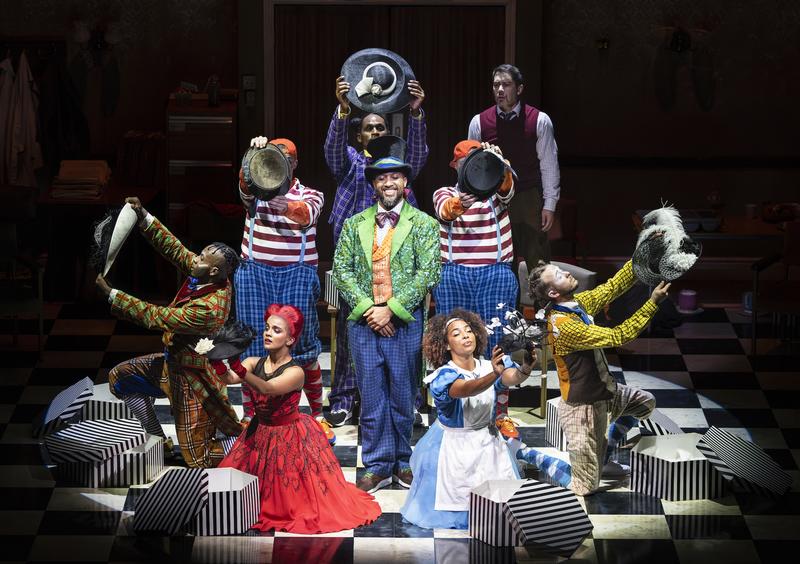
Also on 25 April, as the Cultural Programme formally kicks off, there will be repeat performances of a 20-minute long, electrifying hip-hop dance theatre production of The Mad Hatter’s Tea Party, a nod to Lewis Carroll by ZooNation: The Kate Prince Company, by Kate Prince MBE.
The enduring difference is the attention to underlying knowledge and inquiry within the wider University.
One example of this is renowned artist Es Devlin CBE, Cameron Mackintosh Visiting Professor of Contemporary Theatre 2025-26 and a Bloomberg-Oxford Fellow, and American composer Nico Muhly, who join forces for 360 Vessels, a choral installation created as part of the Schwarzman Centre’s Open House event that will define the opening. Beneath the Great Hall’s glass dome, 360 hand-made clay vessels will form a circular landscape amid the audience as Schola Cantorum of Oxford, the University Chamber Choir, conducted by Steven Grahl, performs a specially commissioned choral work by Muhly. The texts within Muhly’s choral work are drawn from the Dominican roots on which the study of humanities at Oxford University is founded, as well as the words of Thomas Traherne, 17th-century theologian and poet who graduated from Brasenose College in April 1652.
Another example is alumna Kate McGrath OBE (Hertford, 1997), currently a Visiting Fellow at Hertford. Artistic Director and CEO of live performance production company Fuel, McGrath has always championed stories which explore the big questions of our times, and in June will present Beauty is the Beast. She says: ‘Beauty is the Beast is an unflinchingly funny exploration of the beauty industry and its impact on women, girls and our environment. Writer and performer Racheal Ofori gives a virtuosic performance of brilliantly observed characters, in a solo performance which invites us to take a closer look at how capitalism drives a consumer industry with enormous impact on our lives and planet.’
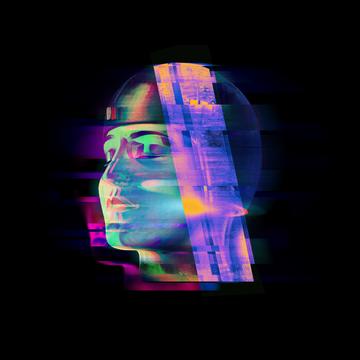
Alumna and playwright Ella Road (Somerville, 2010) is reconceiving the Karel Čapek 1920 Czech play R.U.R. as a newly birthed production called Robota (right). Ella says the original, which ushered the very word ‘robot’, is ‘unbelievably prophetic’, picking up directly on pressing issues of agency and freedom in light of artificial intelligence.
Working within a partnership between the Headlong Theatre touring company and the Schwarzman Centre, Ella says she began with a new translation of the original play, and is shortly to bring an early draft in to workshop with Oxford academics drawn from the very faculties that recently moved in, she notes, ‘literature, philosophy, AI ethics’. ‘What’s the difference between humans and robots? What’s a free robot? What’s a free human? These are political questions,’ she suggests.
The director is Roy Alexander Weise MBE and the play will be performed 3-18 July in Oxford before likely touring, in that way helping to shape a national debate, projecting Oxford conversations to a much wider audience.
Another brilliant alumna, theatre director Erica Whyman (Wadham, 1988) is collaborating with communities in the Leys part of the city, building on the successful Leys Festivals over the last couple of years, to co-create a theatrical experience which will travel by bus into the city centre, exploring how the histories of town and gown have always been intertwined.
‘Artists are the ultimate convenors,’ says John Fulljames. ‘They bring people together, enable connections and challenge us all to think differently. Oxford has a central role to play in the UK’s creative landscape by supporting the growth of new ideas. The arts and creative industries are a big success story for the UK but they are under huge pressure. The Schwarzman Centre will be a space for convening and a place for big new ideas.’
Professor Grimley describes the Centre as ‘neutral ground and a safe space for discussing very difficult issues’, noting that ‘no wonder the humanities are under sustained political pressure.’
Looking ahead, John mentions that in the autumn there will begin a themed series of performances under the title ‘Utopia Now’, with Professor Peter Boxall of the Faculty of English as academic convenor. One of the luminaries involved will be sci-fi hit author Kim Stanley Robinson, author of The Ministry for the Future, and it’s a fair bet to say that dystopia will also be part of the ensuing conversation.
‘At a challenging moment,’ says Dan, ‘we must offer an alternative vision. The Schwarzman Centre can be a beacon.’
John says: ‘Tectonic plates are shifting. We need the deep thinking of the humanities to help us all imagine and inform the future. There is no greater moment at which to launch the Cultural Programme.’
move to carousel movement controls
 Pause slideshow
move to carousel content
Pause slideshow
move to carousel content

OFF THE SHELF: SEPTEMBER 2026
OFF THE SHELF: SEPTEMBER 2026
ELLA BARON
ELLA BARON

THE IMPORTANCE OF VACCINE ADVOCACY
THE IMPORTANCE OF VACCINE ADVOCACY
SILICON VALLEY CAREER TALK
SILICON VALLEY CAREER TALK

DEGREES WORTH IT AFTER ALL
DEGREES WORTH IT AFTER ALL

OFF THE SHELF: AUGUST 2026
OFF THE SHELF: AUGUST 2026

THE RISE OF BACTERIAL RESISTANCE FROM POULTRY FARMS
THE RISE OF BACTERIAL RESISTANCE FROM POULTRY FARMS
NATURAL HISTORY AT OXFORD REVAMPED
NATURAL HISTORY AT OXFORD REVAMPED

OFF THE SHELF: JULY 2026
OFF THE SHELF: JULY 2026
MALACHI MCINTOSH
MALACHI MCINTOSH
EBOLA: FIRST VACCINATION
EBOLA: FIRST VACCINATION
Pause slideshow

