



OFF THE SHELF: SEPTEMBER 2026
OFF THE SHELF: MARCH 2026

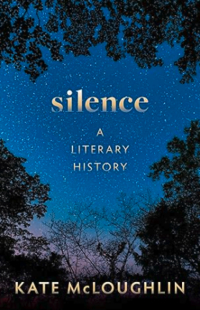
Silence: A Literary History by Kate McLoughlin (Oxford University Press, 26 March 2026)
This almost 700-page whopper of a book feels like a milestone in a relatively recent but vigorously growing sub-field of silence studies. Put your jokes to one side, they are all acknowledged; yes, it’s a lot of words about shutting up. So too, I suspect that almost every reader will bring some clever insight to the table, much as we may have once thought we’d turned the world on its axis with a single, sassy tutorial essay. For this reviewer it was that firstly there was a recent, magnificent precedent set by Oxford’s Diarmaid MacCulloch, Silence: A Christian History (2014), which pondered ‘bad’ as well as ‘good’ silence in church history – concealment as well as mysticism and reflection. Secondly, seeing the Rachel Whiteread Holocaust Memorial in Vienna, where numerous books face inwards to a bunker and are left blank. Diarmaid’s book is acknowledged early on, among many others written over the past decade on this burgeoning subject of academic inquiry. Whiteread, meanwhile, makes her appearance 400 pages in, but more interesting than that, the apophatic tradition (defining something by its absence) she touched on gets extensive treatment as do a vast variety of other ‘silences’. The core subject is British literature, the chosen chronology is 1,200 years from medieval to our own century, and the book dazzles not only for its encyclopaedic reach but its sinuous way with words. Professor McLoughlin parses seven types of literary silence from concealment to gaps; books that are written about silence; books where there is a great big secret hanging over everything like a ghost (step up, 19th-century long novel); and of course mystical or nature-struck silences. To some extent part of the form of a book, silence can also be its subject. Silence breaks down conceptually, and ‘like other concepts, such silences have lineages’. The author says, ‘I’m fascinated by how we know that things are being said implicitly while other things are being said explicitly. Literature, I’ve come to realise, brims with silences.’ Nothing that has been uttered or written would have weight without the idea that it might not have been uttered or written. A useful early reference is the poet Ilya Kaminsky, who is deaf, and who suggests that those who cannot hear ‘don’t believe in silence’ because there is nothing to differentiate it from. Viewed like that, we can grasp the fact that all literature can be read anew through a mapping of different types of silence. It will take time for this book to sink in but we suspect it will go down as a landmark. A former barrister after a degree in English Language and Literature (Somerville, 1988), Professor McLoughlin returned to Oxford later for a DPhil and is now a Professor in English Literature and Tutorial Fellow at Harris Manchester College.
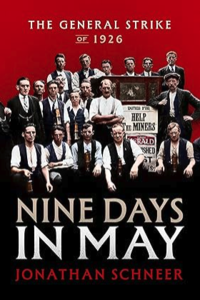
Nine Days in May: The General Strike of 1926 by Jonathan Schneer (Oxford University Press, 26 March 2026)
Remarkably, it will be 100 years on 3 May since the General Strike began in Britain. To mark the occasion as well as to subject it to scholarly scrutiny we have this fantastic volume by award-winning author and historian Jonathan Schneer. He mines previously untapped archival sources to explain why and how the strike came about, why and how it was waged and countered, and why and how it ended. In addition to government and TUC reports, he uses reports of undercover agents and spies, ‘special’ constables sworn in for the duration of the strike, volunteer strike-breakers, Communist agitators, trade-union leaders and rank-and-file members of trade unions, and, of course, the papers of politicians of all parties. This is a tale of Shakespearian dimensions, replete with tragic heroes and villains, and buffoons, opportunists and double-dealers. These contending, evenly matched forces meant to do their duty whatever the cost. Throughout it all ran a certain Britishness, although not everyone was calm and carried on.
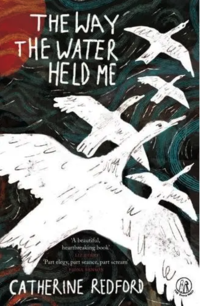
The Way the Water Held Me, by Catherine Redford (The Emma Press, 19 March 2026)
‘A poetry collection that charts my experience as a young widow,’ says the author (St Hilda’s, 2003), whose late wife Rebecca Marsland (also St Hilda's, 2003) studied and subsequently taught at Oxford. When newly married, with the couple expecting their first child, Catherine Redford's wife was tragically diagnosed with a terminal illness. The Way the Water Held Me is a mesmeric plunge into caring, grief, loss and love. Across poems of heartbreak and honesty, memory and mourning, Catherine’s debut collection is visceral, profound and alive with what it is to be human, to have lost and to find ways to continue to love. It has already received five-star reviews from its advanced trade release and Fiona Benson (winner of the Forward Prize for Poetry) describes it as ‘a gorgeous wound and wonder of a book’ and ‘essential, transformative reading’. Catherine adds, ‘The collection contains a sequence of poems about Mary Shelley as a young widow, which may also be of interest to alumni due to Oxford's connection with her late husband, Percy Bysshe Shelley’ (Univ, 1810).
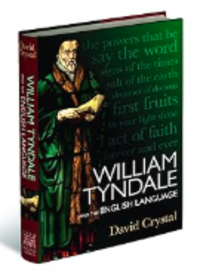
William Tyndale and the English Language by David Crystal (Bodleian Library Publishing, 12 March 2026)
This book is a pioneering exploration of Tyndale's enormous impact on the development of the English language. ‘Dearly beloved’, ‘say the word’, ‘the powers that be’, ‘for ever and ever’ – these familiar phrases and many more were set down in print for the first time by William Tyndale. For his ground-breaking English translation of the Bible, Tyndale deliberately chose to write in a way that could be understood by the widest possible audience. In the first half of this pioneering exploration of the extraordinary impact Tyndale’s writing had on the development of the English language, David Crystal provides an analysis of his prose style, demonstrating its character as a novel genre of ‘written speech’, and bringing to light the remarkable number of cases where Tyndale is the first recorded user of a word or phrase in English. He also draws attention to the hitherto unrecognised role of Tyndale as an early lexicographer. The second half of the book is a linguistic detective story, devising an innovative lexical and grammatical metric to investigate the often-stated claim that 80% of later biblical translations display Tyndale’s influence. The result is a fascinating exploration of the work of the father of the English Bible.
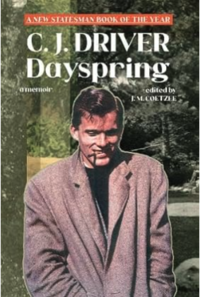
Dayspring: A Memoir, by CJ Driver, edited by JM Coetzee (Batis, 16 February 2026)
CJ ‘Jonty’ Driver (Trinity, 1965) was an anti-apartheid activist and beloved school master. He read for his degree at Trinity shortly after he went into exile from South Africa following his torture at the hands of the South African government in the 1960s, a time which this memoir recounts. In this period of political uncertainty and civil protest, Driver’s reflections on what it means to resist political tyranny and at what personal cost, is a timely contribution to the discourse on protest and civil rights. The memoir covers his early years, progressing into Driver’s tenure as president of the National Union of South African Students (NUSAS) in the turbulent 1960s. This was the work for which he was incarcerated and tortured by the South African government, before fleeing to the UK. He lived in exile for the remainder of his life, working in education and producing several poetry collections. Dayspring also includes a selection of his poems chosen by the editor, none less than Nobel Prize-winning author JM Coetzee. This publication is a new edition for the UK market, the book having already been a The New Statesman Book of the Year 2024. It is also the first volume for new publishing venture Batis Books, by publisher Nick Mulgrew, based in Edinburgh, specialising in poignant non-fiction.

The Museum as Large-Room Pinball Machine, by William Buxton (University of Alberta Press, 6 January 2026)
In 1967, media theorist Marshall McLuhan and his collaborator Harley Parker, pioneer of museum exhibit design, were invited by the Museum of the City of New York to moderate a two-day seminar on museum communication attended by leading museum officials from around the state and further afield. Conflict and even revolution filled the air. The seminar report, originally published in 1969, captures the extent to which the audacious views of McLuhan and Parker on rethinking the museum were greeted with puzzlement, scepticism and consternation, says William (St John's, 1971). Drawing on extensive archival sources, William sheds light on the context of the seminar, its main participants and organizers, its funding, and its reception. He explains that museum exhibits were essentially static at the time, usually behind glass and where the written description pinned them down once and for all time. McLuhan and Parker wanted to change all that and by comparing the museum to a ‘pinball machine’ wanted to emphasise a more dynamic, sensory interaction, ‘with visitors seen as vibrant participants rather than passive spectators’. By email, the author suggests, ‘This subject matters in 2026 because museums – responding to the claims of McLuhan, Parker and others about how media shape our lifeworlds – have largely taken up the challenge of vastly expanding the range of sensory experience explored in their displays.’
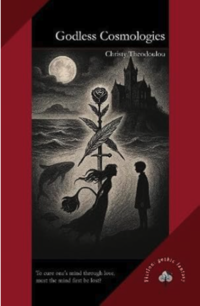
Godless Cosmologies by Christy Theodoulou (Wolfson, 2022) (Hawkwood Books, 16 March 2026)
A debut here into fantasy fiction by recent graduate Christy Theodoulou (Wolfson, 2022). When young Pear arrives at Kopolka's mental asylum on the day of his mother's death, he is summoned to a cavernous midnight rendezvous where he meets Mystery, an enigmatic patient with a penchant for philosophy. He is soon tricked into her service which, at first, requires little more than helping her torment a school tyrant and retrieving a shipwreck for a seaboard shelter. All seems well, particularly during his sojourns to the mollifying Water, a fantasy, underwater world in which he finds himself a whale in the company of erudite octopus Mr Octaveley. Soon, though, he discovers that Mystery harbours dangerous delusions of her own and, as the price of replacing his mother becomes ever more challenging for his shy, quiet nature, the lines between reality and fancy begin to shake. The question is, will Pear let them crumble or can he fight back?
move to carousel movement controls
 Pause slideshow
move to carousel content
Pause slideshow
move to carousel content

ELLA BARON
ELLA BARON

THE IMPORTANCE OF VACCINE ADVOCACY
THE IMPORTANCE OF VACCINE ADVOCACY
SILICON VALLEY CAREER TALK
SILICON VALLEY CAREER TALK

DEGREES WORTH IT AFTER ALL
DEGREES WORTH IT AFTER ALL

OFF THE SHELF: AUGUST 2026
OFF THE SHELF: AUGUST 2026
THE RISE OF BACTERIAL RESISTANCE FROM POULTRY FARMS
THE RISE OF BACTERIAL RESISTANCE FROM POULTRY FARMS
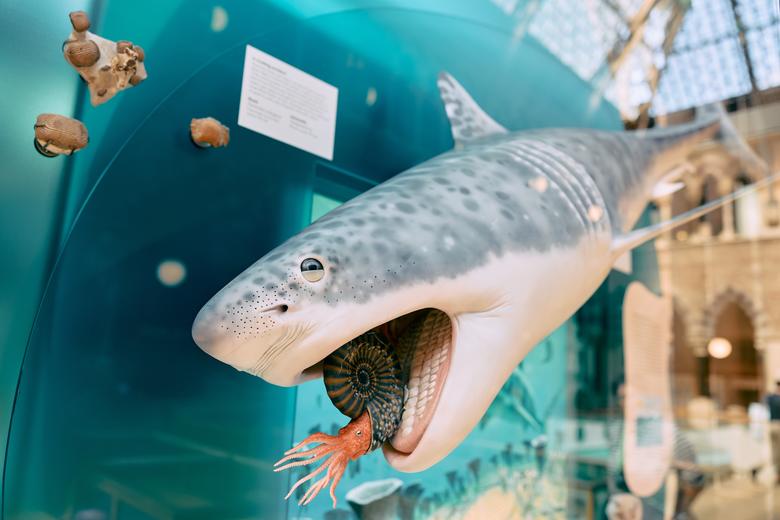
NATURAL HISTORY AT OXFORD REVAMPED
NATURAL HISTORY AT OXFORD REVAMPED

OFF THE SHELF: JULY 2026
OFF THE SHELF: JULY 2026
MALACHI MCINTOSH
MALACHI MCINTOSH

EBOLA: FIRST VACCINATION
EBOLA: FIRST VACCINATION

GRAPPLING WITH THE GHOSTS OF CARIBBEAN COLONIALISM
GRAPPLING WITH THE GHOSTS OF CARIBBEAN COLONIALISM
Pause slideshow

