FROM STEEL TO CHOCOLATE AND BEYOND
Johnny Drain talks about his career in food science and fermentation
Published: 29 July 2025
Author: Richard Lofthouse
Share this article
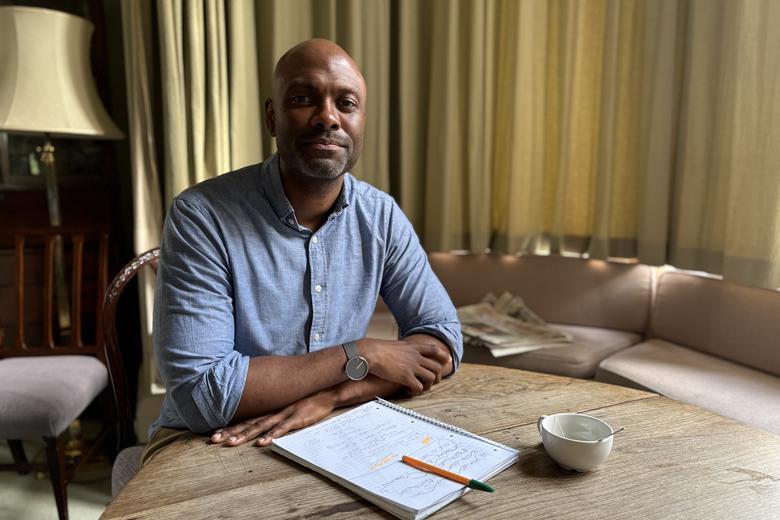
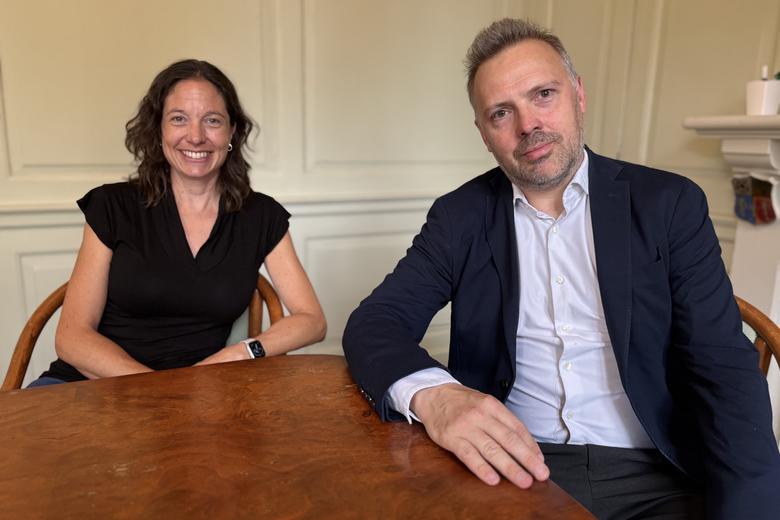
Dr Johnny Drain (St Anne’s, 2009) originally pitched QUAD thus:
‘I've had quite an interesting [career path], one which has taken in working for the world's best restaurants (Noma, Mirazur), to co-founding a food tech startup that created the world's first cocoa-free chocolate (Win-Win Food Labs), to now being CEO of a company using music to make microbes grow better (e.g. to optimise brewing beer or biofuel production or wastewater treatment)... all off the back of my DPhil in materials science at Oxford!’
That barely scratches the surface of a really dynamic career path where Johnny has cultivated strong self-insight as to what makes him happy as opposed to chasing someone else’s formula for success.
His first degree was in chemistry at Bristol, followed by a second at Imperial College, London and then, after a two-year stint in the workplace, a DPhil at Oxford in materials science.
QUAD’s interview with Johnny didn’t intend to begin with genuflections to Oxford but Johnny offers that the collegiate experience at St Anne’s and other colleges was special, and relevant to what transpired when he graduated.
‘I was talking to my wife about this just the other day, the magic off being able to go to the dining hall, you don’t know who will be there but you sit down and have lunch and have a fascinating conversation with someone. That is still a pinnacle of that experience for me. I’ve never had it so richly anywhere else in my life, and part of me is still trying to find spaces and places that provide that.’
He adds later that while at Oxford he played a lot of music, ‘dabbled in film’, and ‘felt so supported in dabbling in other things, and I think I wouldn’t have had the confidence to try and make that leap without the kind of weirdness and wonderfulness of that Oxford experience.’
Let’s rewind. Materials science, Johnny explains, ‘essentially encompasses chemistry, physics and engineering, and you can actually be doing something closer to pure maths, pure physics or engineering, depending which way you go.’
At Oxford he studied the material properties of steel, which meant a lot of supercomputing, modelling of atoms, and travel to Germany. ‘I liked the computational side, and I liked interrogating the structure of the material, and I liked the travel.’
But at the end of it he looked at postdoctoral fellowships and moved home with his parents in Birmingham – and he had by then been following Heston Blumenthal with a degree of seriousness.
‘I decided I wanted to work with food so I began to email restaurants all over the world. Top restaurants – the very top ones with Michelin stars.’
The harsh insight was that chefs don’t read emails because they are far too busy being chefs. But one restaurant replied and it happened to be the best rated restaurant in the world, Copenhagen’s Noma. They invited Johnny to attend their food lab and that, with hindsight, was his big break, his ‘leap’.
‘The next thing you know I was experimentally culturing butter at Noma, but it was a bit more complex than that because a bit of me thought I wanted to be a chef. I gradually realised that it’s a young man’s game – twelve-hour shifts, and I was looking at these 18-year-olds making their start. And here’s me by now hitting my 30s, with a DPhil from Oxford in materials science desperate to apply it to food. These butter experiments were leading to some truly innovative, delicious results. It dawned on me that I had to pursue what I was good at, so my pitch then became simple: I understand why food tastes delicious because I understand food chemistry and the physics.’
Following his stint in Denmark, Johnny pitched other top establishments and suddenly he was consulting Mirazur in France, another of the world’s top restaurants.
The name of his subsequent start-up Win-Win underpins a sunny outlook, because Johnny quickly became a world authority on fermentation, understanding not only that it could enhance the bottom line of top restaurants but that the world of food was restless for a healthier, more innovative form of taste and fermentation. The subject is red hot in 2025, a culmination of post-COVID research into gut health and the human ‘microbiome’, and the broader realisation that eating out, especially at a top restaurant, shouldn’t be defined as perhaps it once was, as a luxurious plate of rich food leaving you feeling a bit overdone. Instead, it should be a delightful experience of taste discovery that is also health-enhancing.
This fusion of scientific precision and culinary curiosity led Johnny to found, with a co-founder, Win-Win Food Labs in 2021. The startup gained global attention for developing a cocoa-free chocolate alternative – a product born not in a test tube, but at the intersection of molecular gastronomy, sustainable sourcing and fermentation.
‘Cocoa farming is under immense pressure, environmentally and ethically,’ Drain explains. ‘So we asked: what if we could recreate the taste and texture of chocolate using locally sourced ingredients like carob, cereals or legumes, enhanced with fermentation? As a materials scientist, you’re trained to look at structure and function. Food isn’t so different.’
Talking to Drain is fascinating. He refers to the ‘science of delicious brown stuff’ as ‘a trillion-dollar sector’. He means not just chocolate but ‘coffee, tea and vanilla’. But the first love is chocolate drawn from cherished childhood memory growing up in Birmingham. ‘My dad would drive us past the Cadbury factory, and my sister and I would roll down the window to catch the scent of roasting cocoa. That smell is a core memory,’ he says.
Win-Win’s approach drew on classical fermentation techniques blended with cutting-edge flavour mapping. Rather than relying on synthetic flavourings or lab-grown substitutes, Drain and his team used traditional microbial processes to coax complex notes out of humble ingredients. ‘Chocolate is chemically complex,’ he says. ‘But it turns out you can hit those same flavour receptors with the right fermentation strategy.’
Since stepping away from day-to-day operations at Win-Win, Drain has embraced another area: sound. He’s now CEO of a venture that is exploring how music and sonic stimulation can influence microbial behaviour – a field with implications for everything from brewing and baking to wastewater management.
‘There’s growing evidence that sound – particularly low-frequency vibration – can alter how microbes grow or produce metabolites,’ he says. ‘In nature, microbes aren’t living in silence. They’re responding to ambient energy, including sound. If we can tune that stimulus, we might enhance fermentation outcomes or reduce resource inputs. That’s incredibly exciting.’
The new company is still under wraps, but Drain is visibly animated by the possibilities. ‘I’ve gone from steel to butter to chocolate to microbes dancing to soundtracks,’ he jokes. ‘But there’s a throughline. It’s all about interrogating the material world with a sense of creativity – and seeing where that leads.’
It’s a theme he returns to often: the power of ‘generalist thinking’ in an increasingly specialised world. ‘We talk a lot about interdisciplinarity, but institutions and funding systems don’t always make it easy. I’ve always believed that real innovation happens in the gaps between established fields.’
As for advice to students or early-career scientists hoping to forge their own path, Drain’s is pragmatic and generous. ‘Be open. Be weird. Embrace the side quests. The best opportunities are rarely the ones you plan for.’
And the chocolate? Will we see Win-Win’s bars on supermarket shelves soon?
‘Imminently,’ he says. ‘We’re still building scale but Win-Win recently signed a major DACH distribution deal with Martin Braun-Gruppe who supply wholesalers, retailers, bakeries and pastry shops worldwide. And, when it does, it’ll taste like childhood and innovation all at once.
There are two other insights Johny offers up that constitute valuable career advice. One is that he did the impossible and got a book contract with Penguin without first getting an agent.
‘I was a guest on the Today Programme on Radio 4, and a Penguin editor emailed me and we went from there…’ The resulting book Adventures in Fermentation: From Ancient Origins to Culinary Frontiers, an Exploration of the Microbes That Shape the World We Live In, is full of sparky science and insight and practical recipes that you can embark upon in your own kitchens – including how to make sourdough starter from scratch.
The lesson there is that attaining a media presence and ‘being out there’ with your enthusiasm and message, can draw in more traditional forms of success rather than setting out to be ‘an author’ and finding that it’s very difficult to break through.
The more enduring insight Johnny shares is one he attributes to one of his doctoral supervisors at Oxford, who he says ‘seemed very happy’. ‘He was happy as a world-leading expert in a particular niche. Because of that he got to travel around the world sharing his knowledge and getting paid.’ Johnny calls it ‘domain knowledge leadership’.
Underlying everything is irrepressible curiosity and a strong, self-starting work ethic.
Adventures in Fermentation: From Ancient Origins to Culinary Frontiers, an Exploration of the Microbes That Shape the World We Live In (Penguin Life, 2025).