

OXFORD'S NEW DEGREE
OFF THE SHELF: JANUARY 2026

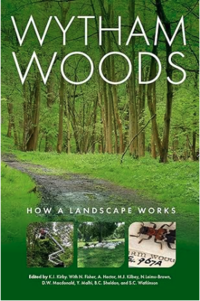
Wytham Woods: How a Landscape Works, edited by KJ Kirby (OUP, 7 February 2026)
Another book on Wytham Woods, possibly the most-researched plot of woodland anywhere! In fact the plethora of new technologies utilised to measure, map and monitor the woods has changed everything in the past decade, while climate change has increased the urgency of the outcomes and the notion of the woods as an ‘eco-system service’. This is an amazing book for tucking everything under its belt while respecting that ultimately Wytham is just one bit of ordinary wood in Oxfordshire, gifted to the University in 1943. Under general editorship by Dr Keith Kirby (Brasenose, 1970), a wide cast of Oxford conservation and ecology researchers are present here as contributors, alongside many more from other institutions and groups. The book is very lively with case studies, box-outs, technology outcomes, but not at the expense of solid, big-picture systems thinking encoded in the title which deliberately places the woods within the broader context of the c.1,000 acre Wytham Estate within which it sits. This is in some contrast to previous studies which tended to isolate the woods. The long-term shaping of the landscape is the first subject, followed by arguably the two most important chapters addressing carbon flows and woodland composition. The carbon flow chapter by Yadvinder Malhi, Professor of Ecosystem Science at the University, is enthralling if you haven’t kept up with this subject and how, for example, terrestrial laser-scanning has resulted in extraordinary mapping of the entire wood, almost down to the last leaf and twig. The authors estimate that the woods offset approximately 8% of the c. 25,000 tonnes of CO2 produced by the non-collegiate University using most recent available figures; somewhat positive except for recognition that this net benefit could turn to net deficit if the woods were to suffer egregiously from drought or amplified tree mortality from the future equivalents of ash dieback, itself a very serious matter. This leads Dr Kirby to remind the audience that growing more trees is no substitute for reducing fossil fuel use. None of these grand themes shut out the celebrated, by now over-half-century-long datasets that Wytham boasts – great tits and badgers each get their own chapters here while Dr Kirby’s original DPhil research into brambles is also brought to bear. There is a lovely, outward-facing chapter about Wytham’s relevance to the world at large, its ‘Place in the Wider Landscape’ – and the importance of building these local and global networks of collaboration. The assessment ends on a wonderfully level-headed note, that ‘tree cover [at Wytham] is less than it was 6,000 years ago but more than it was 200 years ago’, and species diversity and canopy density is probably the best it has been for a millennium, yet a series of urgent challenges threaten to undo that progress. This is a thumper of a book and an academic one at that, with a steep price tag. Yet it drills so deeply into this subject that it must be worth a go if you are the sort of person who avidly supports the Woodland Trust and adjacent proxies. For all professionals in the broadly overlapping sectors of conservation, ecology and farming, it will surely be required reading. Unquestionably one of the big books of 2026.
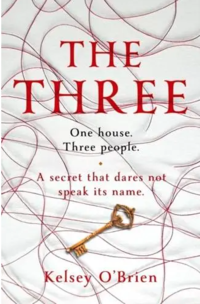
The Three by Kelsey O’Brien (Canelo, 29 January 2026)
1791. The dressmaker, his lover and his lover's wife. A house full of secrets where danger lies behind every door. Matthew came from nothing. Now he is a skilled corset-maker adored by high society. But he must hide his true self from prying eyes, seeking love in the riotous underbelly of Georgian molly houses. If outed, he will face the noose... The publisher says: 'A thrilling and devastating read perfect for fans of Sarah Waters, Jessie Burton and AJ West.' We went to the author (Blackfriars Hall, 2008) who offers this further context: 'My inspiration for this novel came from a V&A exhibition about the history of underwear. I was surprised to learn that Georgian women's stays were made by men, and wondered what a relationship between such disparate people would have been like. What if this staymaker and his upperclass client became friends as she shares her secret revolutionary writing with him? Then I thought, what if their friendship is challenged by his clandestine, long-term romance with her husband? It was a delight to learn about 18th-century architecture and fashion as I researched this novel, and I recalled my time at Oxford to bring certain details to life: the ornate oriel windows of colleges like Balliol and Brasenose, or Magdalen's classically Georgian New Building. I explored the Ashmolean's collection of paintings to understand how people would have dressed and looked. Certain characters were even informed by the people I met at Oxford!' But the research is just one piece of the story: ultimately, this is a novel for readers who enjoy complicated relationships and the intrigue of secrets that cannot stay hidden forever. Kelsey adds that she has another book in the works with even stronger Oxford links, this time from the 1850s...
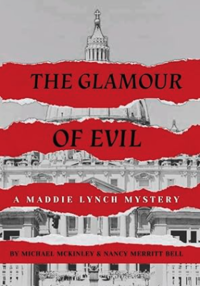
The Glamour of Evil by Michael McKinley and Nancy Merritt Bell (BookGo, 2025)
Michael (St John’s College, 1984) has written with his co-author Nancy Bell a 490-page yarn about a fictional Oxford graduate, Maddie Lynch, of St Jude's (aka St John's) College, who works in New York City as a TV producer. When the Pope announces he's coming to America, she gets sent to Rome to snag an interview with him. She eventually does, but along the way she gets drafted into the Vatican's spy agency, and goes on the hunt for the 250 million Euros missing from the Vatican Bank, and also to find out what really happened to her father, a journalist who was murdered in Lebanon. And she spends a good chunk of time in Oxford as well as she becomes the Vatican's Jane Bond. So it’s a very original plotline and good fun along the way. Michael adds in an aside, ‘They really do have a spy agency, which I learned about while making a film in the Vatican, and now they have their own Bond.’ The volume is also billed as the first in a series, no doubt with the hard-partying, 29-year-old lapsed Catholic Lynch leading the way hereafter as well.
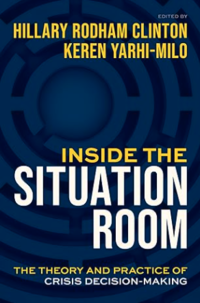
Inside the Situation Room: The Theory and Practice of Crisis Decision-Making, edited by Hillary Rodham Clinton and Keren Yarhi-Milo (Oxford University Press, 8 January 2026)
The first book of 2026 by OUP, and surely destined to go straight onto the required reading lists of international relations and politics departments all over the land. In a powerful tie-up, a leading professor at Columbia has teamed up with Hillary Clinton, formerly the 67th Secretary of State, to try and make academics and practitioners learn together how to make better pressured, ‘high risk’ decisions. It may come as no surprise that for the most part this doesn’t happen. Academics roar around with elegant theories of crisis decision making, now a sub-field of international relations, while the actual big beast politicians growl at each other and then take a punt on a particular course of action. This book tries to dismantle the silos. The actual Situation Room the book title refers to is the basement of the White House, created after the Bay of Pigs fiasco in 1961. Successive US leaders have made nerve-shredding decisions in that room, from the Cuban Missile Crisis to the fall of the Soviet Union, to the decision to go after Saddam Hussain and Osama Bin Laden, those two case studies absorbing whole chapters here and underlining the ‘Clinton era’ past-hits vibe of the book and its many illustrious contributors. Coming out five days after the current US administration captured the leader of Venezuela, there is a curious sense in which the book is both more and less relevant. It has much to say about the framework and practice of making such decisions but almost nothing to say about the underlying values that the USA projects on the world stage, as though they are implicitly wholesome examples of statecraft. One is also left wondering if Trump is as much an outlier as he has been portrayed by some opponents. It’s rather the American way to bring super-villains to heel, almost like a Marvel comic plot. Former Oxford University Vice-Chancellor Dame Louise Richardson notes in her review of this volume that it should be required reading for 'every student of international relations and every practitioner and would-be practitioner of American foreign policy'. Emphasis there on ‘American’. Question mark on what it means in 2026.
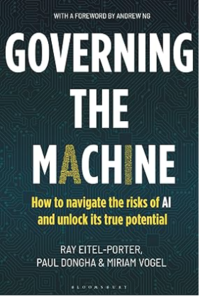
Governing the Machine: How to navigate the risks of AI and unlock its true potential by Ray Eitel-Porter, Paul Dongha and Miriam Vogel (Bloomsbury Business, 2025)
Lead author Ray Eitel-Porter (Christ Church, 1981) brought this important book to our attention. He is former global head of Accenture’s Responsible AI practice and now advises multinationals and the public sector on AI governance. The problem, as the collective authorship puts it, is that deployment has outpaced governance. 75% of companies already use AI, but only a third have any guide ropes in place for how that usage is constituted. Published late last year, the book has been cited as a landmark study. It asserts the leadership challenge posed by artificial intelligence. It has already earned a garland as a roadmap to how, as a society, we might harness the transformative potential of AI, while navigating and mitigating its inherent risks. One premise of the book is that public trust in AI is low. For companies to take full advantage of AI, it is vital that they adopt and communicate a responsible approach in order to build consumer, employee and investor confidence. In other words, the breathless technology is not enough on its own, and for many good reasons.
Governing the Machine provides business leaders with a practical and flexible framework for building comprehensive and robust AI governance. The really big one seems to be consumer trust. You thought you were ‘chatting’ to a nice lady about a used car at midnight, but, hey ho, it’s a bot. Is that good or bad for the parent company, now that trust has been undermined? As such, the book is organised around principles of AI use; a variety of approaches towards safeguards; technicalities and training; and multi-geography legal frameworks. No doubt a second edition is already in the works, perhaps aided by AI?
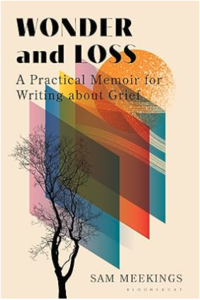
Wonder and Loss, A Practical Memoir for Writing about Grief by Sam Meekings (Bloomsbury Academic, 2026)
This is a striking, original and perhaps unexpected narrative, where the author (Mansfield College, 2000) shares his own vulnerability to write movingly about his younger brother, who died suddenly from cardiomyopathy at a tragically young age. But as an Associate Professor of Creative Writing at Northwestern University in Qatar, he has structured the whole book so that for each segment we get a counterpart ‘this is what I was doing here’ instruction and reflection. It might seem disconcerting but it’s authentic. It also has a brilliant starting point which would be easy to run over and then promptly forget: the suggestion that loss is a very close cousin of wonder, both forcing us into the unknown. Underneath it all, of course, there are common patterns to grief, while in every other respect each experience is utterly unique. Writing about it is a rather powerful tool, not just to process it but to celebrate the person lost. He writes: ‘Writing grief means balancing between depicting the effects of bereavement in the present and dramatising the memories of the past that haunt those left behind. It can be a tricky balancing act: too much of the present and the reader will get no clear sense of the unique person that is being mourned, while staying too long in the past risks losing some of the dramatic tension.’ These writerly notes, completely practical, also offer a further glimpse into what is actually unfolding. A captivating approach to a universal yet entirely personal subject.
move to carousel movement controls
 Pause slideshow
move to carousel content
Pause slideshow
move to carousel content
SARAH RUDEBECK
SARAH RUDEBECK
OFF THE SHELF: SEPTEMBER 2026
OFF THE SHELF: SEPTEMBER 2026
ELLA BARON
ELLA BARON

THE IMPORTANCE OF VACCINE ADVOCACY
THE IMPORTANCE OF VACCINE ADVOCACY
SILICON VALLEY CAREER TALK
SILICON VALLEY CAREER TALK

DEGREES WORTH IT AFTER ALL
DEGREES WORTH IT AFTER ALL

OFF THE SHELF: AUGUST 2026
OFF THE SHELF: AUGUST 2026
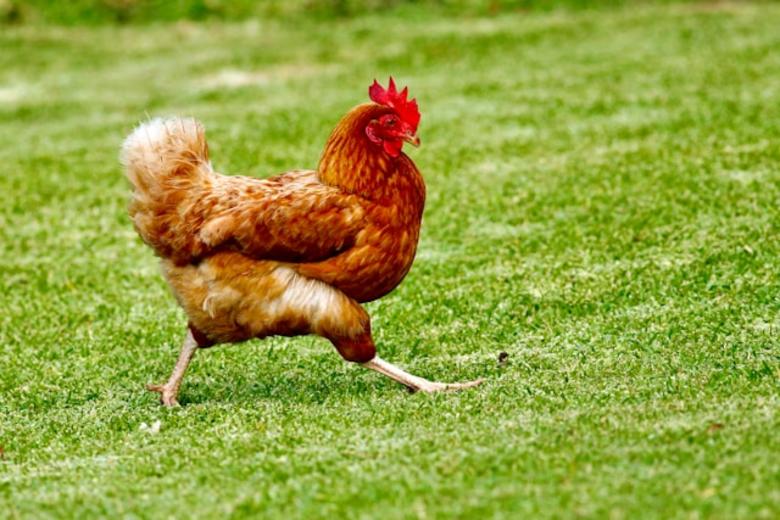
THE RISE OF BACTERIAL RESISTANCE FROM POULTRY FARMS
THE RISE OF BACTERIAL RESISTANCE FROM POULTRY FARMS
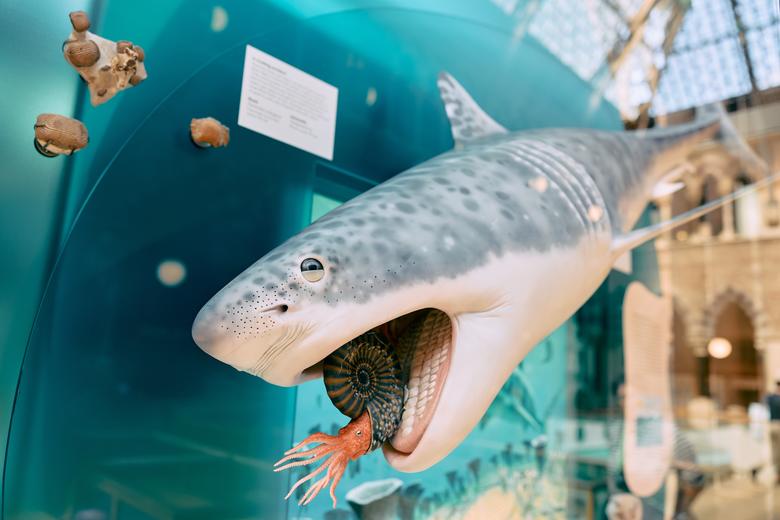
NATURAL HISTORY AT OXFORD REVAMPED
NATURAL HISTORY AT OXFORD REVAMPED

OFF THE SHELF: JULY 2026
OFF THE SHELF: JULY 2026
MALACHI MCINTOSH
MALACHI MCINTOSH
Pause slideshow

