

ELLA BARON
OFF THE SHELF: SEPTEMBER 2026

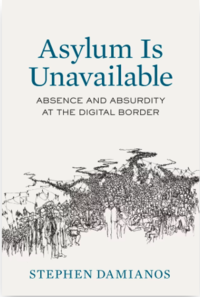
Asylum is Unavailable by Stephen Damianos (University of California Press, 22 September 2026)
The author (Balliol, 2020) has meticulously explored the possibility that governments might actually exploit poor technology to conduct an unstated policy, thereby avoiding accountability. It amounts to a real-world, large-scale version of the Little Britain comedy sketch in which a bored employee of a bank tells the customer ‘computer says no’, except that there is no human in the case of asylum applicants in Greece, bidden to call Skype in order to apply, only to receive no answer. The author says that of 8,835 calls from asylum seekers to the Greek Asylum Service, just nine were answered. No border was ever as effective as this invisible, deniable, deliberate, digital deficiency. Oxford’s Alexander Betts, Professor of Forced Migration and International Affairs, says the book advances the concept of ‘digital pushback’, exposing how governments conceal ‘systematic harm in mundane machinery’. He continues: ‘Sobering and impossible to ignore, this is essential reading for scholars and policymakers grappling with the future of asylum protection in a digital world.’ Damianos is Executive Director of the Neurorights Foundation and Lecturer in Ethics and Public Policy at Cornell University.
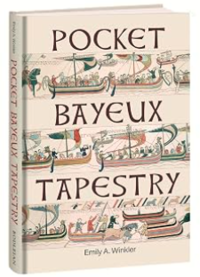
Pocket Bayeux Tapestry by Emily A Winkler (Bodleian Library Publishing, 7 September 2026)
Emily Winkler (Jesus, 2008) is Lecturer in Medieval History at Hertford College and St Edmund Hall. A marvel of compactness, this wonderful little book explains scene by scene what the tapestry depicts, the author having first explained the broader intricacy of politics and diplomacy that frame the mighty Battle of Hastings of 14 October 1066 and the death of King Harold. The actual reproduction here is of a drawing of the tapestry by 19th-century artist Victor Sansonetti, a reminder that there is a book history of the tapestry as well as the nearly miraculous survival of the actual linen and wool panels, 1.5 metres tall and 70 metres long, on loan and on display now at the British Museum until 11 July 2027. The cue here must be to buy this pocket-sized guide and read it ahead of visiting the real thing. Or if London is out of range, then just buy and read this guide, with its expert guidance and pristine images. An estimated 6,000 soldiers died that day and the English crown changed hands, yet there were other contenders, Danes abounding and Norman and even Hungarian connections to contend with, even among the Anglo-Saxons. King Edward the Confessor had only died earlier the same year, and at a time when bloodlines did not determine the line of succession. Such complication is deftly brought to life here, without shirking from the fact that it was a very bloody, all-or-nothing battle by medieval standards.
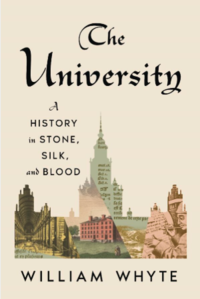
The University: A History in Stone, Silk, and Blood by William Whyte (Harvard University Press, 11 August 2026)
Professor of Social and Architectural History at Oxford, William Whyte’s (Wadham, 1994) latest book is a sweeping history of the buildings and materials that have shaped nine centuries of university life across different countries, tracing the connections between the university’s shifting physical form and its evolving social and cultural meanings. Oxford is prominent but by no means the only example. Throughout is a nuanced awareness of the physicality of buildings and institutions, ultimately the more recent idea of a student campus, and overall of the shifting but perennial anxieties of authorities that too much money or richness might undermine learning and scholarship, often in collision with the high standards and tastes of some academics, allowing some buildings to become architectural treasures, most often as either libraries or chapels, convergently book-centred following the Reformation. In a strange way what Whyte has done here is to answer in the most original way: what is a university? As he has pointed out recently on social media there is so much bad publicity currently that we would all be better for paying this deepest question some attention. The answers will be a source of strength, but also realism.
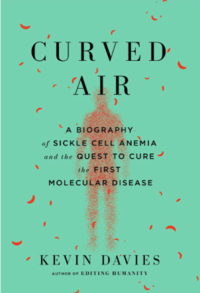
Curved Air: A Biography of Sickle Cell Anemia and the Quest to Cure the First Molecular Disease by Kevin Davies (Harvard University Press, 25 September 2026)
Kevin Davies (St Peter’s, 1979) is now Executive Editor of The CRISPR Journal and founding editor of Nature Genetics. His scientific biography of sickle cell disease takes us from its origins in sub-Saharan Africa around 10-20,000 years ago, to its first identification in the early 20th century, through to the hope offered by current medical breakthroughs from CRISPR’S gene editing treatment with Casgevy. Balancing the science with the very human stories of those affected, Davies has conducted interviews with many of those living with the disease about their experiences, including with Victoria Gray, the first to undergo the ground-breaking Casgevy treatment, as well as the scientists and doctors working to treat the disease (part of the story dwells on the work done at the Weatherall Institute at Oxford). It’s a remarkable tale well told, of interest both to specialists and general readers alike.
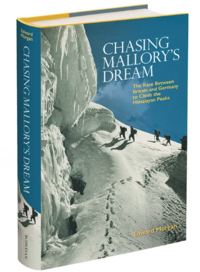
Chasing Mallory’s Dream by Edward Morgan (Bodleian Library Publishing, 3 September 2026)
This is a gripping story of Himalayan climbing between the wars, which was one of the most dramatic periods of mountaineering history owing partly to national rivalry between Britain and Germany. When George Mallory and Andrew Irvine (Merton, 1921) disappeared on Mount Everest in 1924, the British nation mourned their loss, but the story was a broader one than this British chapter. All of the mountaineers were affected by the First World War: some were veterans of the trenches, others were raised in its shadow. The author explains how Britain and Germany saw Himalayan climbing as a route to national renewal, a sentiment reinforced in Germany by the arrival of the Nazi regime, which encouraged reckless risk-taking for national glory. The attempts to realise ‘Mallory’s dream’ involve some of the most dramatic stories, poignant tragedies and fascinating characters in mountaineering history. Recounting these perilous expeditions, the book explores the motives of the participants and their contrasting attitudes to risk, leadership and climbing style. Some of the striking archival photographs are from Irvine’s archive which is held by his college, Merton.
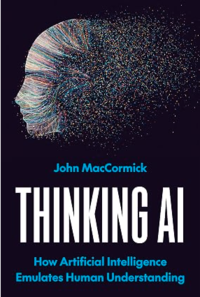
Thinking AI: How Artificial Intelligence Emulates Human Understanding by John MacCormick (Princeton University Press, 2026)
The author (Exeter, 1996) is today Professor of Computer Science at Dickinson University in Pennsylvania. In an opinion piece he published in the Washington Post earlier this year he characterised artificial intelligence as the next ‘Darwin moment’, arguing that artificial intelligence forces humanity to surrender its final claim to biological and cognitive uniqueness. The book is an amazing effort, not all of it easy to understand for a layman. It progresses from a big-picture view of AI to much discussion of neural networks, only then moving to other observations such as the scale of the AI tools that are now abounding. If this reviewer is right then the crux of the book’s thesis is a diagram titled computationalism, in which the author boils down three philosophies of cognition and argues that unlike biological naturalism and dualism, computationalism argues that computer programs, the minds of non-human animals and the minds of humans ‘are qualitatively the same’. Not everyone will agree, but they will struggle to frame their replies without the help of AI now that they are everywhere all the time.
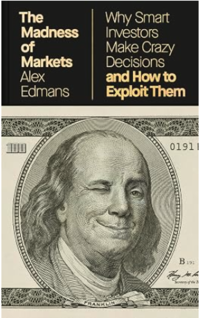
The Madness of Markets: Why Smart Investors Make Crazy Decisions and How to Exploit Them by Alex Edmans (Penguin Life, 17 September 2026)
And now to markets, which is not to leave behind AI. The author (Merton, 1998) is Professor of Finance at London Business School. His first chapter heading is, ‘Bubble Trouble: Why We All Go Crazy at the Top’. His last chapter heading is ‘Outsmarting the Market: Turning Madness into Opportunity’. The enduring insight is that stock markets are inherently irrational, or rather, that human beings who make them go up and down are. Welcome to behavioural economics, the branch of the dismal science that boomed after 2008. Edmans’ initial insight was to track stock market performance to world cup performance, discovering that ‘stock markets consistently fell after the national team lost a match’. From there to all the crazy stuff: the fact that AI is currently dethroning professional financial advisory, but simultaneously driving warp speed ups and downs, meme-driven frenzies of investing, cryptocurrency where there is no underlying asset, and gold where there is, sort of. In theory a Swiss watch; in practice a sweaty teenage boy at a disco, bragging non-stop, is the analogy Edmans uses to describe markets in 2026. To be fair there is jargon along the way, and disposition effects and realisation utility may not exactly set your heart on fire. But it’s a lively book, mercifully endowed with a comprehensive glossary, and perhaps to be read alongside Andrew Ross Sorkin’s 1929 Inside the Crash. The author was asked for a timely note on what comes next, so it’s back to AI: ‘My prediction is that we're due an AI correction. AI is a genuine technological revolution, but markets have a long history of getting the direction right and the speed wrong. They overestimate how quickly change will happen, and today's valuations often reflect tomorrow's world arriving far sooner than it actually will.’
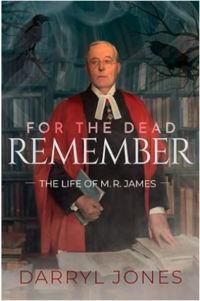
For the Dead Remember: The Life of M R James by Darryl Jones (Oxford University Press, 10 September 2026)
This is a serious work of scholarship running to over 400 pages, yet probably not so many people are familiar with Montague Rhodes James. As the author (who is also General Editor of The Oxford Sherlock Holmes) says very frankly, despite James being recognised ‘as perhaps the outstanding scholar of his generation’, and later on a Vice-Chancellor of Cambridge University and Provost of Eton, and famous writer of ghost stories, nonetheless he’s not by any means everyone’s cup of tea. Something in the combination of cruel Victorian public school output plus repressed gay identity plus troubled nightmares invoking his enslaving family forebears resulted in a man who was indelibly misogynist, prone to repellent cliquishness and as a scholar incurious to almost everything of interest and curious about subjects that were safely antiquarian, to the point of irrelevance. At one point the author says that in a rare poem, James ‘appears to acknowledge…the emptiness of being the man who knew so much and so little worth knowing’. He lived through the institutions he worked in. His capability as an administrator was possibly his greatest strength. His towering achievement was to obtain in 1930 the Order of Merit (‘the most exclusive club imaginable’) on account of his ‘unique knowledge of illuminated manuscripts, medieval literature, ecclesiastical architecture and stained glass windows’. The book is most compelling for its prosopography – in other words M R James as the entry point to everyone around him, King’s College Cambridge at an exciting time intellectually, and a large cast of characters ranging from J M Barrie to Fred Benson, never mind a huge cast of Eton staff and students. A bit like Daisy Dunn’s Not Far from Brideshead, in which Maurice Bowra is one of the key people (not entirely unlike Monty James), this book is to be read for its sweep through this incredibly turbulent, often strikingly sad at a personal level, period of British history, roughly 1880-1950.
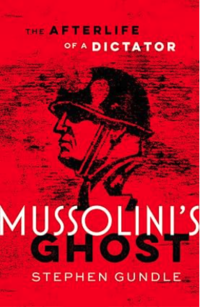
Mussolini’s Ghost: The Afterlife of a Dictator by Stephen Gundle (Oxford University Press, 27 August 2026)
Italy didn’t have a Nuremburg Trial and was to a degree different to Nazi Germany because it was plunged into a vicious civil war and Mussolini strung up by his feet in Piazzale Loreto having been murdered by Italians in April 1945. This meticulous work of scholarship is troubled by the lack of honesty in Italy, the lack even of mourning of the passing of Mussolini, which would have been required in order to actually let him go. Instead, he was disappeared on a dime and has lived on ever since. The author notes that cultural memory is treacherous. Today, he notes, we’re in an Italy where populists want to honour prominent fascists of the period, ‘like the aviator, minister and one-time organiser of Fascist thuggery Italo Balbo and the war criminal General Rodolfo Graziani…’ There is perhaps another way of reading the book, which is to recognise that the appeal of politics is partly an appeal of narrative dressed in theatre. People need to hear a story about who they are and where they are going. Fascism was good at this. There was lots of colour, lots of built environment, and a central figure with whom millions of ordinary Italians built their own mental connection. Democracy was never as exciting, and in 2026 that is a problem for the proponents of democracy.
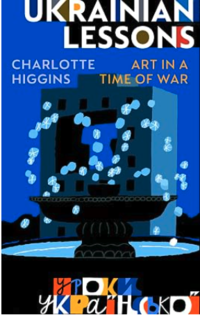
Ukrainian Lessons: Art in a Time of War by Charlotte Higgins (Jonathan Cape, 20 August 2026)
The author (Balliol, 1990) is chief culture writer at Guardian News & Media. Ukraine is experiencing a boom in art of all forms. People want to live and they want to learn. Poetry readings are routinely sold out while smart phones are put down as books are devoured, by teenagers and old alike. Education and language is valued, just as it is attacked. More than this, argues the author, art has become a matter of life and death in a war fuelled by the attempted erasure of Ukrainian culture by Russia – a war that has killed countless artists and created countless more. Other wars, especially the Great War, or World War One if you prefer, are the deep background. In times of war, art and literature are where difficulty and complexity survive: where the most painful, unspeakable truths can still be faced. Drawing on Higgins’ two decades of cultural journalism, three years of visiting Ukraine and her training as a classicist, Ukrainian Lessons explores the profound connections between war, art and life. It is a searing, urgent and unforgettable book about what artists are prepared to risk – and why culture is worth fighting for.
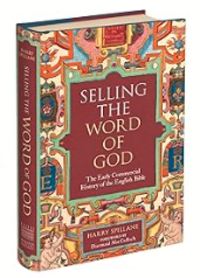
Selling the Word of God: The Early Commercial History of the English Bible by Harry Spillane (Bodleian Library Publishing, 24 September 2026)
The occasion for this cracking volume is the 500th anniversary of Tyndale’s translation of the New Testament. Historically, different translations of the Bible have been studied mostly for their theology, or more lately the technology of their printing. It is forgotten that market economics were at work too. This volume covers the period from the first printed English Bible in 1525 to the King James version of 1611. ‘Behind each edition are stories of rivalries, mistakes, bankruptcies and bestsellers.’ The English Bible remains the most published text in history. How that happened is also a tale of commercial intrigue and commercial rivalry. The author is a historian at Cambridge, the foreword is by Oxford’s Emeritus Professor of the History of the Church, Diarmaid MacCulloch. The book itself is very beautifully turned out by Bodleian Library Publications.
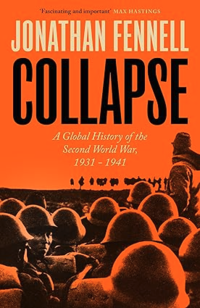
Collapse: A Global History of the Second World War, 1931-41 by Jonathan Fennell
The author (Pembroke, 2002) will go on to publish two more volumes, making Collapse the first in a trilogy. Speaking to QUAD, he says that one of the aims is to re-assess World War Two through 200 million letters described and analysed in official ‘censorship reports’, which he says have only been ‘nibbled at’ by previous historians. This has enabled a human tone to be struck in what might otherwise seem to be such a vast undertaking as to become impersonable. The other thing this volume does is to emphatically bring back China and Japan’s invasion of it, explaining the dates of this volume. Japan invaded China in stages, beginning with the Japanese invasion of Manchuria on 18 September 1931, followed by a full-scale invasion on 7 July 1937. A subsequent volume will cover the Communist revolution, ending in 1949. A most fascinating table shows the purchasing power of Chinese professors, soldiers and civil servants reduced by approximately 80% in just four years from 1937-41. Only farmers did better. None of this is at the expense of the Western Front, North Africa, the Red Army. But the arc of the narrative concerns what Part Two dubs ‘Civilisational Crisis’, and by the end of this volume we have landed at ‘Worldwide Total War’. Although not the point or purpose of Fennell’s labour, it takes very little to imagine the return of all this, of barbarity and technology intermingled with individual lives that go on as normally as possible. Fans of Anthony Beevor will love Fennell’s approach.
move to carousel movement controls
 Pause slideshow
move to carousel content
Pause slideshow
move to carousel content

THE IMPORTANCE OF VACCINE ADVOCACY
THE IMPORTANCE OF VACCINE ADVOCACY
SILICON VALLEY CAREER TALK
SILICON VALLEY CAREER TALK

DEGREES WORTH IT AFTER ALL
DEGREES WORTH IT AFTER ALL

OFF THE SHELF: AUGUST 2026
OFF THE SHELF: AUGUST 2026

THE RISE OF BACTERIAL RESISTANCE FROM POULTRY FARMS
THE RISE OF BACTERIAL RESISTANCE FROM POULTRY FARMS

NATURAL HISTORY AT OXFORD REVAMPED
NATURAL HISTORY AT OXFORD REVAMPED

OFF THE SHELF: JULY 2026
OFF THE SHELF: JULY 2026
MALACHI MCINTOSH
MALACHI MCINTOSH

EBOLA: FIRST VACCINATION
EBOLA: FIRST VACCINATION

GRAPPLING WITH THE GHOSTS OF CARIBBEAN COLONIALISM
GRAPPLING WITH THE GHOSTS OF CARIBBEAN COLONIALISM

ADAM SMITH
ADAM SMITH
Pause slideshow

