



OFF THE SHELF: SEPTEMBER 2026
UNLOCK EVOLUTION…
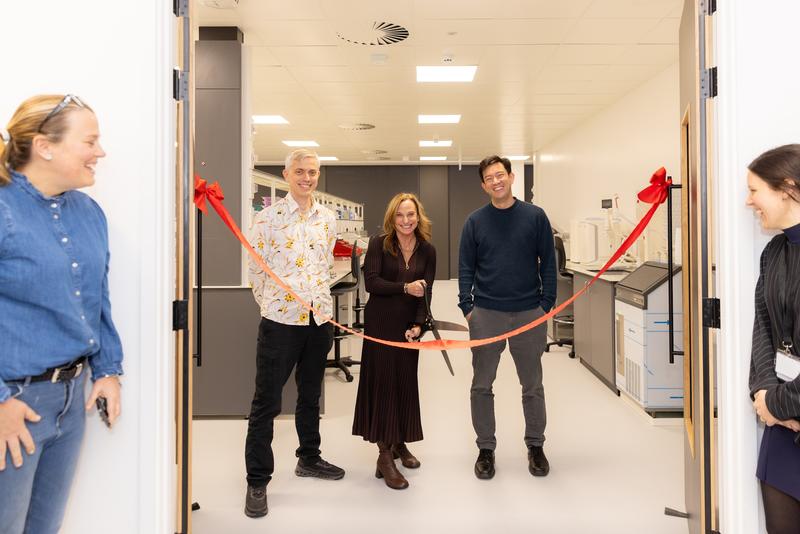
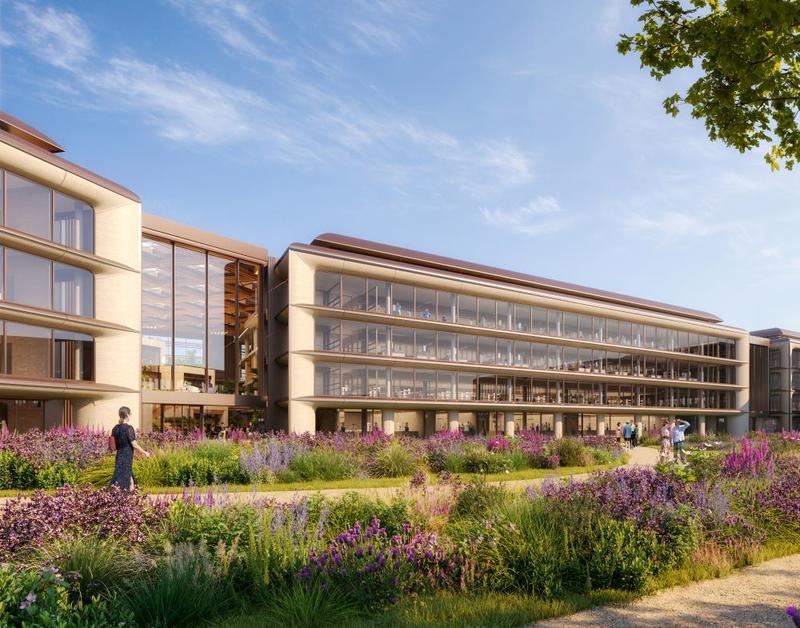
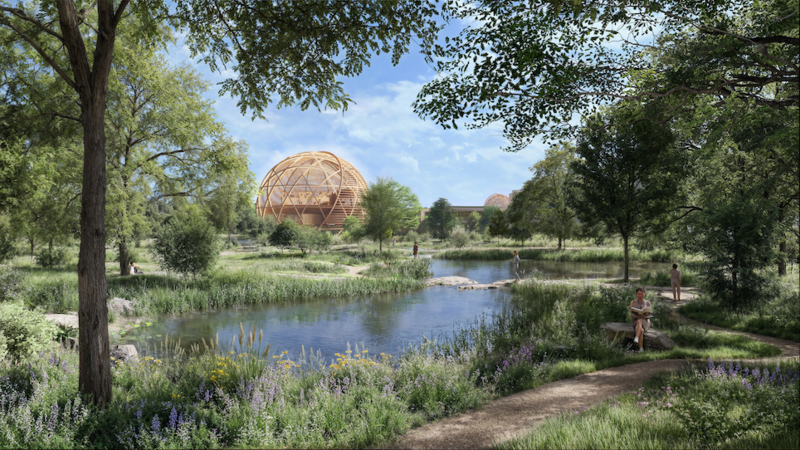
Ellison Institute of Technology, named after businessman Larry Ellison, began in Los Angeles and expanded to Oxford in late 2021. A major campus was announced in 2023 and is currently amidst construction, expected to complete in 2027. EIT is not a part of the University of Oxford and it is for-profit, yet sees itself playing a critical role in helping the University translate discovery science into impact, particularly in the areas of health, food security, climate change, AI and robotics. In the words of EIT Oxford and Global President Professor Santa Ono, ‘EIT is not only a new campus or organisation. It is an effort to build a model where science, education, and commercialisation reinforce one another.’
New labs
19 January saw Oxford-based Ellison Institute of Technology (EIT) open its first notable lab space in a building named after the famous physicist and fellow of Magdalen College, Erwin Schrödinger.
That very Oxford combination of the collegiate University on one hand (the Oxford Science Park on which EIT’s campus is being constructed is owned by Magdalen, the western part acquired by EIT in 2025) and a rapidly scaling for-profit commercial venture backed by Oracle founder, CTO and Chairman Larry Ellison, is a perfect fit in 2026. It also provides the perfect backdrop for interviewing Professor Steve Kelly, who has feet in both camps as well as being the co-founder of agricultural tech start-up Wild Bioscience, and Lisa Flashner, COO of Ellison Institute of Technology.
Steve wears it as lightly as a feather but at the very end of our discussion admits there is pressure.
No kidding. He’s been tasked with nothing short of re-engineering the global food system.
At the University he is Professor of Plant Science in the Department of Biology and Senior Research Fellow at The Queen’s College; at EIT he is Executive Director of the Plant Biology Institute, wearing the same hat for Wild Bioscience, an Oxford University spin-out. Far from pulling him in different directions, he sees these roles as a winning combination.
There’s climate change, there’s fractured politics and there’s mass emigration, and shadowing them all there is global food production. Over the next 10, 20, 30, 50 years we cannot keep going as we are and solve the food question. We can only cut down so much forest to release more agricultural land; mechanisation has, in some regards, reached a natural limit; chemical inputs are massively destructive environmentally. We have to do something new. That will involve re-engineering the plants.
Green revolution... and the next
That view of the fairly recent past – back to the mid-20th century – also describes the ‘Green Revolution’ of the 1960s, plus most commercial agriculture since then and still all around us in 2026, locally and globally. It worked beautifully to feed a spiralling global population, but at a huge cost to nature and soil health, a sort of mortgaging of the present at the expense of future generations.
2% of the world’s energy goes into synthetic fertiliser. It’s a chemical solution that we’ve had for a century but it’s like a drug. We’ve got to break the habit.
I’ve heard of the current fashion for no-till (or ‘no-drill’) agriculture, where you stop ploughing the soil and releasing carbon and losing nutrients. Professor Kelly agrees it’s awesome, on paper at least. ‘But to make it work you need massive, I mean prodigious amounts of chemicals, herbicides and insecticides.’
The way ahead is not to navel gaze, or travel backwards to pastoralism (he sees organic farming in its current form essentially as low yield farming), or double down on controversial genetic modification, but to work with the massive genetic variety and diversity already there in nature, often in wild plants, capturing nature’s own insights from millions of years of evolution to precision-engineer crops to be better.
For the first time in human history this is becoming possible owing to the application of molecular and genomic biology with computational methods including AI.
Succeed, and mankind will still be fed. Fail and we’ll tumble backwards into a vicious place of periodic starvation and food competition that characterised most of human history before the discovery of oil and one of its chief derivatives, fertiliser. Climate change will intensify everything, as it already has, but more radically and more quickly in the coming years.
Lisa says, ‘Larry’s dollars are welcome, but his superpower is how he sees the world.’ She adds, ‘the time he spends here with our scientists; go big, shoot for the stars, fail fast, it’s OK if some of it fails because the bit that succeeds will outshine the rest.’
Larry worked with Oxford scientists during COVID, also came to love Oxford, and helped the University with Oracle-enabled cloud computing resources. But the decision to go all-in on the Institute, with $2 billion committed and talk last year of potentially $10 billion, is a clear-sighted attempt to tackle the really big issues facing mankind: generative biology and human health; plant biology and food security; AI and robotics.
There were some changes to the overall programme in 2025 but it is now powering ahead, led by EIT Global President Santa Ono, a distinguished Canadian-American immunologist.
Why did Larry choose Oxford? Lisa says without pause,
he wanted a melting pot, not just an AI Institute, not just one thing but many things. That’s why Oxford attracted him. He highly respects the University. It’s been a great relationship.
It’s a West Coast, Silicon Valley world view, but in numerous ways, bar some of the cultural nuances, it’s a vision that the University had already embraced, going back at least to the 1990s, with myriad spin-outs and a significant cascade of patents and other IP coming out of the University, helped by the University’s own Oxford University Innovation (OUI) and part-owned venture-builder Oxford Science Enterprises (OSE).
Wild bioscience
Last October saw the first joint venture funding by OSE with EIT, where they led a $60m funding round for Steve’s company Wild Bioscience. As Steve puts it, funding an agrotech business at that scale only happens occasionally in the US, while in Europe it’s ‘almost unheard of’.
The enthusiasm for the company rests on its use of artificial intelligence to interrogate plant genomes. At the time of the raise, Larry Ellison said: ‘Wild Bio is using AI to better understand the lessons learned over millions of years of evolution encoded in plant genomes. Those insights, combined with precision breeding, have enabled Wild Bio to develop new varieties of crops with both higher yields and climate resilience. The ultimate goal is to grow these new crop varieties on a commercial scale and help provide food security around the world. EIT is committed to working with Wild Bio to reach this goal.’
Steve explains that traditional plant breeding is very slow, taking years to marry one element to another within a species. Not to be confused with genetic modification, the emerging frontier is today all about ‘precision-bred organisms’, or ‘precision breeding’.
Steve continues, ‘we are going to harness the enormous genetic potential in the wider crop gene pool. This means that the changes we are making are already tried and tested by nature. We are pioneering a new way to turbo-charge the process of combining this natural variation in the same plant using a regulation-friendly approach – unlocking a new way to help achieve a global revolution in sustainable agriculture.’
Eliminating silos
Steve Kelly is working closely alongside Professor Jason Chin who last year moved from Cambridge to Oxford, where he set up the Generative Biology Institute at EIT and became a fellow of Magdalen College. Chin’s world-leading research in advancing the ability to engineer biology could unlock new possibilities in healthcare and sustainable agriculture.
The scale of the ambition is not in question. Steve says that a surprisingly small number of plants supply most of the world’s calories – wheat is 20% and rice is another 20%, then corn and soy. On a global scale, although these plants provide the majority of the calories in the human diet, we get most of our nutrition from fruits and vegetables. Those big, blockbuster crops are where the emphasis of the research is being placed, but Steve also has in his sights plant oils such as palm and rapeseed, ‘for which there is insatiable demand’.
Lisa says, ‘we’re here to take discovery science and translate it into impact, to tackle global problems and complex systems.’
EIT’s first generation of sponsored scholars took up residency at the University in October 2025. 46 students from 18 countries and 5 continents are now part of EIT’s inaugural Education & Scholarships programmes which span undergraduate, graduate and doctoral study at Oxford. Their arrival marked a historic moment for the University, and they were personally welcomed by Oxford Vice-Chancellor Professor Irene Tracey.
But the broader synergy rests on EIT and the University remaining separate and doing what they do best.
If the University pursues blue sky research and fundamental knowledge, and spin-outs commercialise the discoveries, the explicit role of EIT is to step back, envision the global solution, assemble the right teams (eventually as many as 5,000 people on the full campus) and design a business plan so that the solutions can scale commercially, and thus sustainably.
Steve, whose current team of 15 scientists at EIT will quickly build to an envisaged 300, is at pains to say, ‘there’s no magic bullet.’
Describing a ‘massive tech stack across many areas’, he says, ‘my job is to pull it together. There is first the AI informatics and genomics to see variations; secondly new tools and techniques to rewrite plant genomes; and third, technologies of transformation to apply to plants.’
It’s a daunting but exciting challenge, picking up a baton bequeathed by the Victorian pioneers of evolution, Alfred Russel Wallace and Charles Darwin. This time the intention is to harness evolutionary insights rather than observe and explain them.
move to carousel movement controls
 Pause slideshow
move to carousel content
Pause slideshow
move to carousel content
ELLA BARON
ELLA BARON
THE IMPORTANCE OF VACCINE ADVOCACY
THE IMPORTANCE OF VACCINE ADVOCACY

SILICON VALLEY CAREER TALK
SILICON VALLEY CAREER TALK

DEGREES WORTH IT AFTER ALL
DEGREES WORTH IT AFTER ALL

OFF THE SHELF: AUGUST 2026
OFF THE SHELF: AUGUST 2026
THE RISE OF BACTERIAL RESISTANCE FROM POULTRY FARMS
THE RISE OF BACTERIAL RESISTANCE FROM POULTRY FARMS
NATURAL HISTORY AT OXFORD REVAMPED
NATURAL HISTORY AT OXFORD REVAMPED

OFF THE SHELF: JULY 2026
OFF THE SHELF: JULY 2026
MALACHI MCINTOSH
MALACHI MCINTOSH
EBOLA: FIRST VACCINATION
EBOLA: FIRST VACCINATION
GRAPPLING WITH THE GHOSTS OF CARIBBEAN COLONIALISM
GRAPPLING WITH THE GHOSTS OF CARIBBEAN COLONIALISM
Pause slideshow

