

OFF THE SHELF: SEPTEMBER 2026
OFF THE SHELF: JUNE 2026

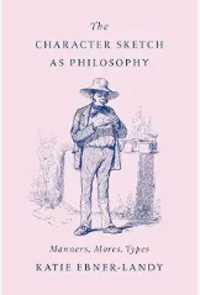
The Character Sketch as Philosophy by Katie Ebner-Landy (Harvard University Press, 2025)
The author (Oriel, 2011) sits amidst an encouraging trend towards academic books that appeal to a wider reading public. Her definition of intellectual history, is ‘the study of why people thought what they thought when they thought it…’ Splendid. Her study here revisits a volume of thirty ‘character types’ penned by the 4th century Theophrastus, designed to cultivate political and civic virtue. He covered ordinary vices such as ‘bad timing’, ‘absent mindedness’ and ‘idle chatter’. Such examples were partly entertainment but they were designed to show people how not to behave. A rich history ensued with piles more characters, translations, emendations, amplifications, right across early modern Europe which is where the book heads. As a genre, Ebner-Landy defines it as ‘moral instruction by bad example’, but her broader point is that the character sketch was also what passed for philosophy, with additional politics thrown in such as during the English Civil War, when Roundheads and Royalists and other factions could be boiled down to ‘types’, often for scurrilous intent. This all ended. The character sketch as philosophy was taken to bits by David Hume and other Enlightenment philosophes who wanted to interrogate the underlying principles behind knowledge and morality, for whom the mere appearance of ‘character’ was no longer enough. She’s too sophisticated to put it like this but that was the moment philosophy became difficult for ordinary people to follow because it ceased to be ‘painting’ and instead became ‘anatomy’, to use Ebner-Landy’s analogy. Meanwhile, literature went off into a flowery, walled garden. There continued to be harsh intellectual criticism around the typecasting individuals, often experienced as ‘repression’ if you were, say, a woman or gay, a discussion that defined the late 20th century. Plus, liberalism walled off the private life and became coy about vice, with the result that – for example, she points out – pornography is often tolerated or condoned today in ways that might otherwise seem surprising. Ebner-Landy ends with forensic sketches of the recent history of the ‘mansplainer’, the ‘anti-semite’ and ‘the host’, a way partly of pointing out that real life charges on, day in and day out, and character sketches keep springing up because they are true and they serve a purpose, as they did for thousands of years. All this has a huge bearing on literary criticism, where ‘character’ was out of fashion, not to say taboo, but now returning. Character appears to be back with a bang, including the most fiercely contested debates about what constitutes civic and political virtue, this review penned the day after cage fighting in honour of a sitting US president was held at the White House, which has been compared to Roman gladiators – themselves originally cast to the baying crowd as ‘character types’.
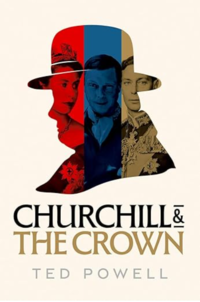
Churchill and the Crown by Ted Powell (Oxford University Press, 28 May 2026)
The author (Merton, 1973), after his first BA in History from Merton went on to a DPhil in Medieval History from Pembroke College, Oxford. That comes in handy here because not only has he done everyone a great favour by plugging this seemingly obvious gap in our focus around Churchill – his relationship to no fewer than six monarchs – but Powell has gone back in time to emphasise just how extraordinarily Winston’s forbears had cultivated and captivated kings and queens. Put it this way: Blenheim Palace didn’t just happen, it was earned. Earlier Churchills were central to the Glorious Revolution and had indeed been central to James II just before, but dissenting from his Catholicism (John Churchill, 1st Duke of Marlborough, 1650 –1722). This was a cornerstone of Winston’s own mythology, that his family had in a sense secured the grand settlement of William and Mary, parliamentary government and a constitutional monarchy. It was a form of British exceptionalism, the greatest gift to the world as Winston understood it, we learn. In his own life Winston Churchill was a young cavalry subaltern under Queen Victoria, a cabinet minister under Edward VII and George V, a close adviser to Edward VIII and prime minister under George VI and Elizabeth II. Study it from another angle and almost everything he stood for collapsed before his eyes, especially as World War One destroyed most of the European empires (in particular the Austro –Hungarian). Yet the British crown stayed intact, battered and bruised though it may be, and some of the themes of Churchill’s devotion remain tantalising, and as recent debate has shown, whether or not he appears on bank notes, almost as a ‘non-royal royal’, remains a fervently live topic. The book is also inherently readable, a triumph for terrific history.
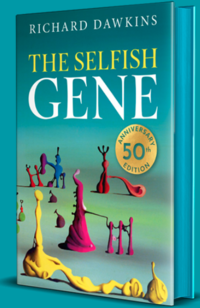
The Selfish Gene by Richard Dawkins (50th anniversary edition, Oxford University Press, 1 June 2026)
Oxford’s Department of Biology will hold an important conference in September to mark the half-century since Professor Dawkins (Balliol, 1959) published his landmark book The Selfish Gene. The anniversary edition is no processionary, given that the original remains in print in 30 odd languages. Rather, it is a continuation. In an epilogue, the author in just a few pages slices and cuts his way through several thickets, ranging across time and space, rapier sharp, sometimes pugnacious, always with humour aglow and never losing sight of individuals. Landing Darwinian natural selection as the only game in town is one outcome. ‘I stick my neck out and prophesy that, if we ever discover life elsewhere in the universe, however strange and alien its detail may be, it will be Darwinian,’ he writes. The epilogue reads more like a bravura journal article than a footnote to the past. It will merit careful reflection by scientists, and is not generally accessible to the casual reader. Yet the energy and excitement is palpable, such as his asking ChatGPT to write a poem inspired by a luminous paragraph concerning replicators, errors, vehicles, design and survival machines – the core constituents of his original argument. It is reproduced here and Dawkins says he was ‘struck dumb with admiration’ for the artificial intelligence that produced it. In a rather more personal note the epilogue then reproduces Dawkins’ father’s schoolboy notes from a ‘thinking aloud’ ramble by the renowned biology teacher A G Lowndes at Marlborough College in 1932. It secures the human actor. He says: ‘I consider my father fortunate to have had a teacher who thought aloud in front of his pupils, rather than simply telling them what’s what.’ It’s a beautiful ending but we’re not off the hook. Just before that appendix, he ends on a rather different note, comparing us, ‘the soft, wet products of first-order biological evolution’ with machine learning and AI. He offers that humans may yet find themselves falling away as the machines take over, ‘like the expendable Stage One booster rocket that hurls a spacecraft towards escape velocity.’
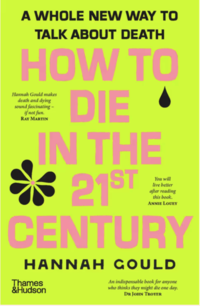
How to Die in the 21st Century by Hannah Gould (Thames and Hudson, 3 March 2026)
A rather comforting/discomforting follow-on from Dawkins, Dr Hannah Gould has written a cracking book about the modern taboo called death. Her first degree and current academic post at the University of Melbourne, Australia, Gould also has an MSc in Visual, Material and Museum Anthropology from Oxford, 2014–2015, and says this about her work: ‘My research spans new traditions and technologies of Buddhist death rites, the lifecycle of religious materials and modern lifestyle movements. In sum, I study the stuff of death and death of stuff.’ That’s a helpful clue here because the book ranges far and wide to negotiate what is so often a difficult subject amidst the decline of traditional religious codes and the broader marketplace of ideas that has sprung up, including other religious traditions and lifestyle fads. The blurb says: ‘As we enter an era of "peak death", this book challenges us to stop avoiding the inevitable and instead embrace it as part of a good life. Honest, witty and deeply reassuring, Gould invites readers to confront mortality not with fear, but with curiosity and courage.’ That it does so with such a great sense of humour is also part of why it works so well. A book to enjoy, notwithstanding the subject of our certain demise, and has been dubbed ‘the most comforting book about death you’ll ever read.’
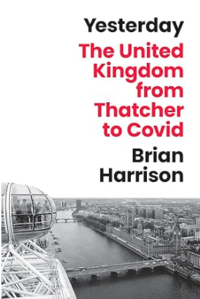
Yesterday: The United Kingdom from Thatcher to Covid by Brian Harrison (Princeton University Press, 12 May 2026)
Brian Harrison is Emeritus Professor of Modern History at the University of Oxford and an emeritus fellow of Corpus Christi College. This title, spanning nearly 900 pages, completes a trilogy that began with Seeking a Role: The United Kingdom, 1951–1970, and Finding a Role? The United Kingdom, 1970–1990. The current volume follows the example of the earlier two in commanding an extraordinary range of sources that are allowed to speak for themselves, yet while allowing us to feel that we’re in good hands. There’s a shimmering sense of humour too, often deadpan. In the section on British attitudes to religion, it is noted that in 2015 the Church of England deleted the ‘Devil’ from the baptism liturgy, for fear of putting off the broader public. The decision was made by ‘a polite show of hands at the General Synod.’ Harrison braids a rather brilliant thread with such instances, while never losing control of a master narrative. Pausing for breath, he reminds us that almost all religious groups declined in the UK, but especially the Church of England owing to ‘diminished respect for authority, relaxed attitudes to theology and indecision about current moral issues.’ He distinguishes between secularisation and secularists, the latter an energetic caucus including the likes of Richard Dawkins and Peter Hitchens, who the author concludes the section on; but he also pays great attention to the way that the broader marketplace for religions of all kinds became ever busier in the late 20th century, so that relativism was all but guaranteed, including among non-Christians such as younger Muslims, many of whom became ‘cultural’ adherents rather than religious in the traditional sense. This process had very deep roots in the Christian marketplace of belief in the Victorian era, but post-1945 it became far more global. Within the broader scope of the book, Harrison wants to ask in what sense Britain declined. He argues that the United Kingdom experienced tension between unparalleled social change and a pragmatic political culture which sought continuity. ‘Thatcher’s legacy was slowly digested, Blair’s "New Labour" thoroughly scrutinised and the decision was made after 47 years to leave the European Union. The UK’s long-established major institutions—monarchy, parliament and the union between England, Scotland, Wales and Northern Ireland—were all under severe pressure. That said, there was growth and innovation in conservation, digitisation, tourism, consumerism, sport and the arts'. Decline is often relative or complexly subjective.
This volume deserves to be read carefully by everyone. It abounds in insights that you might assume didn’t exist, owing to the familiarity of our collective ‘yesterday’. In fact Blair and 1997 was a long time ago now, while changes to social class, ethnicity, health, welfare, learning, leisure, industry – not to mention the rest of the world in which the UK had to continue to participate – changed enormously while technology evolved rapidly. It’s all here, and it’s all brilliantly conveyed.
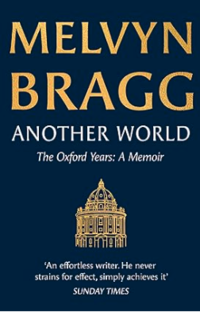
Another World The Oxford Years: A Memoir by Melvyn Bragg (Sceptre, 2026)
Noting here that alumnus David Stanbury (Wadham, 1960) has written about his own time at Oxford, by way of writing about this memoir by broadcaster Melvyn Bragg (Wadham, 1958).
move to carousel movement controls
 Pause slideshow
move to carousel content
Pause slideshow
move to carousel content

ELLA BARON
ELLA BARON

THE IMPORTANCE OF VACCINE ADVOCACY
THE IMPORTANCE OF VACCINE ADVOCACY

SILICON VALLEY CAREER TALK
SILICON VALLEY CAREER TALK

DEGREES WORTH IT AFTER ALL
DEGREES WORTH IT AFTER ALL

OFF THE SHELF: AUGUST 2026
OFF THE SHELF: AUGUST 2026
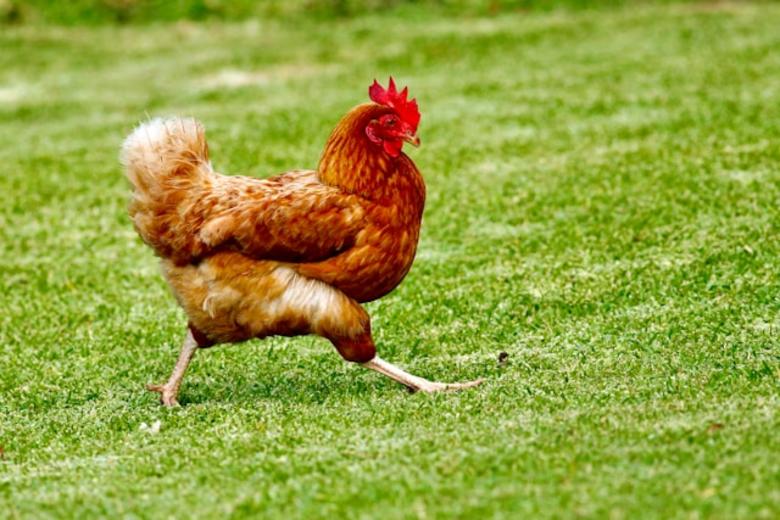
THE RISE OF BACTERIAL RESISTANCE FROM POULTRY FARMS
THE RISE OF BACTERIAL RESISTANCE FROM POULTRY FARMS

NATURAL HISTORY AT OXFORD REVAMPED
NATURAL HISTORY AT OXFORD REVAMPED

OFF THE SHELF: JULY 2026
OFF THE SHELF: JULY 2026
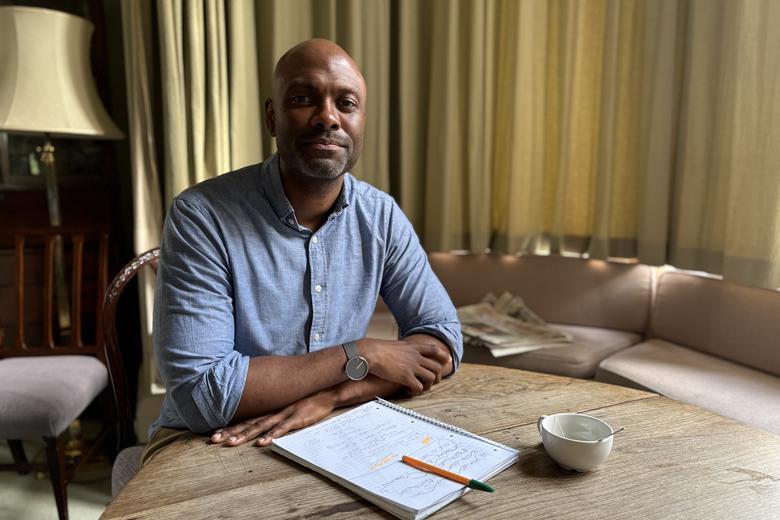
MALACHI MCINTOSH
MALACHI MCINTOSH

EBOLA: FIRST VACCINATION
EBOLA: FIRST VACCINATION
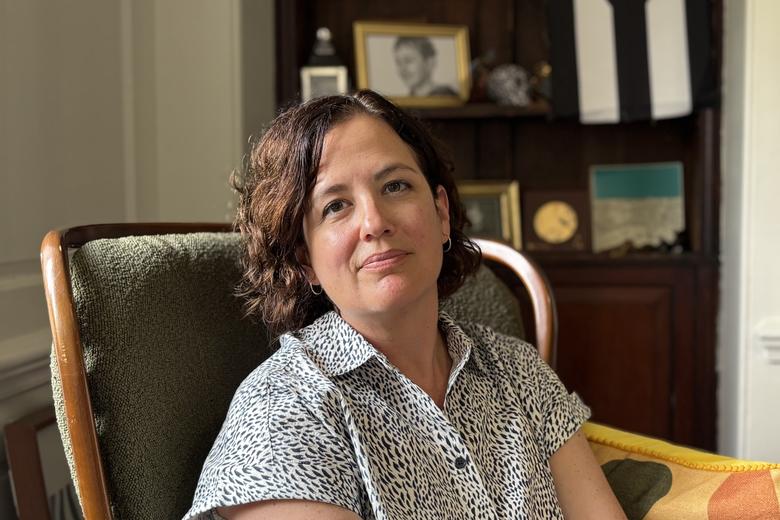
GRAPPLING WITH THE GHOSTS OF CARIBBEAN COLONIALISM
GRAPPLING WITH THE GHOSTS OF CARIBBEAN COLONIALISM
Pause slideshow

