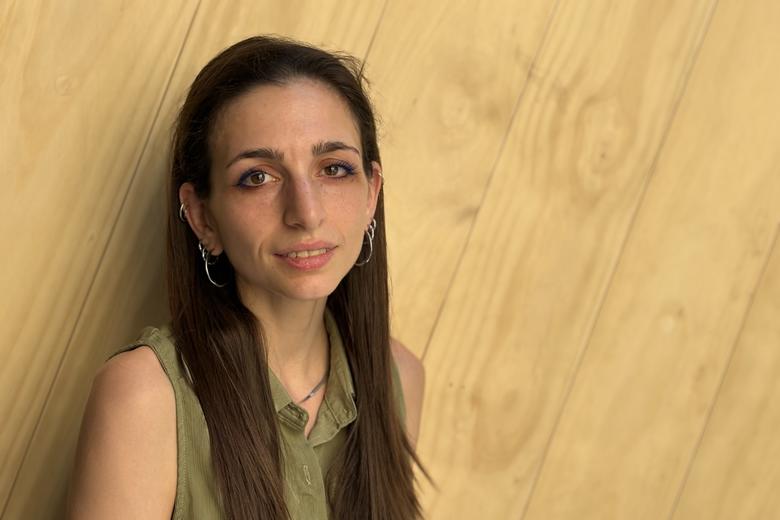
María del Pilar Blanco, Professor in Spanish American and Comparative Literature in Oxford’s Faculty of Medieval and Modern Languages, reports that Oxford is on an absolute roll right now for scholarship about the Americas, broadly described to include Central and Latin America, the Caribbean, and diasporic Spanish communities in the US.
‘We are a celebrated space in which discussion about Latin America can flourish,’ she notes.
There are several reasons for this, including CaribOx, a programme for visiting academics launched by All Souls College and TORCH (The Oxford Research Centre in the Humanities). CaribOx is one of the initiatives launched by All Souls in response to the legacy of Christopher Codrington (1668–1710), a former fellow and benefactor of the college, whose wealth derived in large part from the work of enslaved people in the West Indies.
Professor Blanco is the academic lead for the programme, which sees two Visiting Fellows a year experience Oxford, initially from their existing base for ten months and then in an immersive, residential visit of two months in Trinity term, when they stay at All Souls. Additionally, there are several travel bursaries aimed at younger faculty that cover all travel expenses and accommodation for two to four weeks per year.
The programme has just opened to applications for the 2027–28 academic year, its third year of operation.
Another reason for Oxford’s positive trajectory right now is that ‘prospective students, particularly those from Latin America, have begun to consider the UK a better alternative to the US, especially during the second Trump presidency.’
But the positive reason, beyond this obvious one, is that Oxford has kept its head. ‘We are world-leading scholars with unparalleled resources, but we are also hard working and Oxford offers a neutral and honest space.’
Background and current work
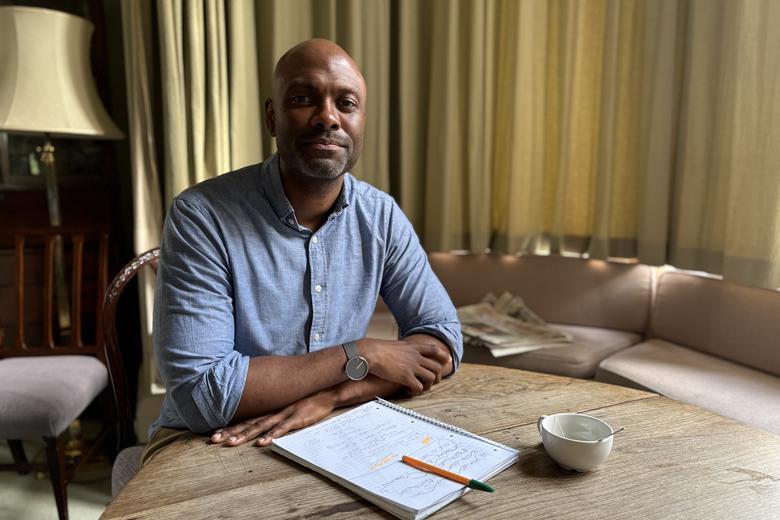
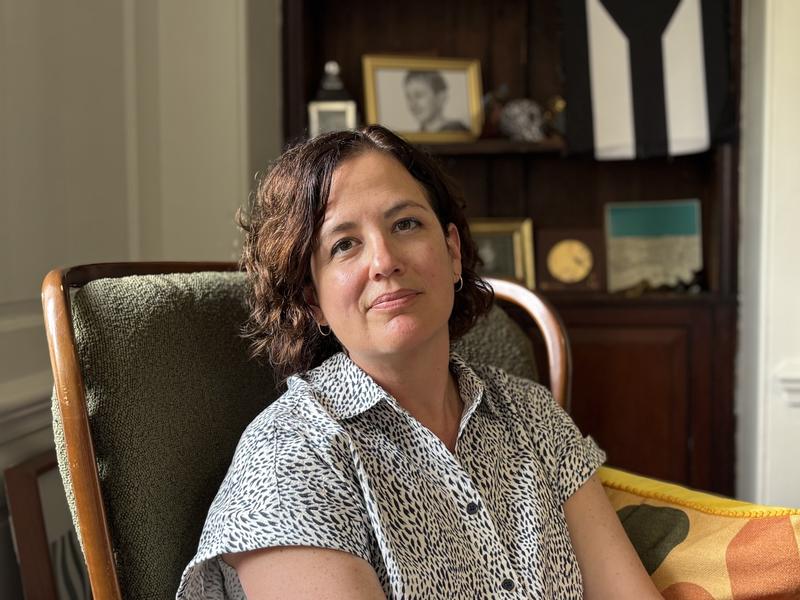
Today we’re sitting in a quiet, elegant room inside Trinity College, where Professor Blanco is a Tutorial Fellow. She praises both the college and the city it sits in. ‘We’re an academic city but Oxford is big enough that I can breathe out. Wherever I go to a campus university in the US, I miss the little world that is Oxford.’
Professor Blanco did her PhD at New York University and grew up in Puerto Rico.
She notes that her father was Cuban. Her love of languages begins with Spanish but includes French, English, German, some Portuguese, and even a little Yiddish.
Her next book, to be published by Oxford University Press later this year, is called Modernist Laboratories, and involved a lot of time in various archives, in particular in Mexico City.
‘I delve into a series of periodicals and magazines of the 1880–1920 period. The magazines are focused on different audiences and ideologies, including children, Spiritualism, literature and art, social science, medicine. There was an overarching, emergent theme concerning a burgeoning awareness of the relative ‘underdevelopment’ of Latin America compared to the US and Europe, yet there was also a charting of ‘progress’ that was dramatised by these magazines; and then also a critique of progress too, even a subversion, by the likes of Julio Ruelas (1870–1907), who made his name as the principal illustrator for modernista (read, symbolist and decadent) publication Revista Moderna during the late 1890s and first decade of the 20th century.’
Professor Blanco says her next project will concern the depiction of children in and around the creation of a US empire, not distinct from a sort of humanitarianism but one that was mixed up in colonial power structures and sentimentalised through appeals to ‘Uncle Sam’, to justify and sell the idea of the US as a friendly force.
‘The child was made into a symbol of ‘good developmentalism’,’ she says. The yellow press, for example, made a great appeal under the banner, ‘Don’t forget the dying children of Cuba!’ during the Cuban-Spanish-American War of 1898, but the broader question of what makes up humanitarianism within a colonial project is self-evidently both complex and contradictory. ‘The appeal to the children hides a desire for empire building.’
The importance of haunting
We turn to the earlier themes of Professor Blanco’s research career. She tells me about a childhood love of horror films, which led her to watch films and TV shows that she wouldn’t necessarily want her own 11-year-old son to watch now, in 2026.
‘I had this absolute fascination with ghosts and ghouls. Over time, however, it evolved away from horror and towards a realisation that the more interesting ghosts are those that don’t necessary scare, that emerge out of our anxieties about death and finality, and that abound in all communities.’
This bit of our conversation lights up a vast hinterland of research, with several books resulting, including the splendidly titled Ghost-Watching American Modernity: Haunting, Landscape, and the Hemispheric Imagination (2012). Another volume she highlights for its broader appeal and success was The Spectralities Reader: Ghosts and Haunting in Contemporary Cultural Theory (2013), which she co-authored with Esther Peeren.
Later, when leaving Trinity College and re-entering Broad Street, it is amusing that right outside there is a board advertising ‘Oxford Ghost Tours’ in a way that will be ‘spine-chilling’.
That is not what ghosts mean in comparative literature, although it is a fruitful point of departure. In fact, she mentions a particular essay by Henry James on Nathaniel Hawthorne concerning the lack of old gothicky houses of the sort that proliferate in Britain but are absent in the US, owing to its relative youth as a modern nation state.
‘But of course the US is hugely haunted – empty deserts that are full of memories and people, invisibly in the past; mountains; first nations, evanescent human present within landscapes, especially at the intersection of borderlands with other nations, such as with Mexico.’
She mentions the novelist Cormac McCarthy, but more especially Juan Rulfo (1917–86) the highly acclaimed Mexican author of 1955 novel Pedro Páramo, a foundational figure in modern Latin American narrative.
In one sense this idea of ‘ghosts’, we agree, partly has to do with the human carnage that followed in the wake of European colonial penetration of Latin America from the 16th century, and is echoed by the modern spiritualism of the later 19th century, the backdrop for which was partly rapid societal change, and the enormous surge in seances and mediums following another scene of carnage, World War One.
Does Professor Blanco believe in ghosts? This is a stupidly blunt question but she sends me away with the answer in the form of an extraordinary catalogue of art works by Phillip Chen, one of which hangs in her office in Oxford, where strangely misaligned symbols and embodied objects speak to each other across a richly arranged aesthetic, a dream-like symbolism expressing a fragmentary narrative.
Within the catalogue, whether it’s the initial quoting of Emily Dickinson from 1863 in which she declares that the brain has corridors capable of being haunted, that ‘one need not be a House…’, or ideas of ‘transgenerational weight’ and ‘an ethical attitude toward our cultural inheritance…’, in an essay penned by Professor Blanco, the idea of ‘haunting’ is in the broadest sense a rejection of the bluntly material.
If we scratch that a level deeper, it touches German philosopher Kant’s distinction between phenomenal and noumenal, re-expressed two centuries later by French thinker Jacques Derrida as many things but in particular as a splintering of time, that may fly like an arrow but can go backwards and forwards nonetheless; the idea of ‘landscapes of modern simultaneity’ is one that Professor Blanco mentions with particular gusto – you can be present yourself and alive to someone or something in a previous century, a previous time, but also to someone invisible, but nevertheless there in our own present time. In that sense historical imagination can amount to a culture of haunting.
Not everyone will buy into the theory-laden recesses and complex vocabulary of some of these trajectories of thinking, but in a further essay in the catalogue history professor John Monroe notes how Bertrand Méheust, historian of French mesmerism from the 1770s to the 1940s, refuses to make an argument for or against the possibility of the paranormal (ie ‘is it true?’), but instead ‘he begins by questioning the very idea of facticity itself, opening a fascinating, disorientating world of both/and’.
Stand back from it all and you’re partly left with a strategy of cultural defiance in the face of other structures of power, whether colonial, political, societal or economic; and the wholesale, often spurious narratives we tell ourselves about ‘progress’ that must always stick to the facts and advance in a purely phenomenal realm.
Professor Blanco is part of a caucus of thinkers and writers who urge us all to peer more closely into the murk and mystery of existence, and to retain a sense of wonder.
Latin American fiction, and translating it into English
It helps that this is also a massive theme of Latin American literature – Rulfo a forbear of Gabriel García Márquez, whose hugely acclaimed 1967 novel One Hundred Years of Solitude tells the multi-generational story of the Buendía family and is anchored in a floating, mysterious world that shimmers and dissolves across a vast play of landscape, generation and place.
Professor Blanco teaches Spanish American literature right across the modern period from 1850 to the present, with a particular interest in modernism and modernisms at the fin de siècle, which coincided with American imperialism as the Spanish empire retreated.
The US acquired Puerto Rico in 1898 from Spain and it remains an unincorporated US territory today, with similar arrangements for Guam and American Samoa. The Philippines was fully colonised in the same year through war, while swathes of Mexico had been conquered in the 1840s.
There is a natural progression from such subjects to the business of translation, about which I ask about because of the rapidly incoming tide of artificial intelligence, which might seem to offer instant ‘progress’ and vast swathes of Spanish literature suddenly accessible in English and perhaps all languages. This would be a striking instance of linear progress, wouldn’t it?
We never get as far as large language models ‘hallucinating’, the very term appearing to conjure ghosts and haunting. No, translation is a human business as far as Professor Blanco is concerned.
‘It’s a huge problem we are contending with, students either not reading or taking short cuts with a text. To teach translation is to teach reading. It is about an unmediated interaction between a person and a text. You need to linger, particularly if you are reading in a language other than your own.
‘AI can summarise a point very quickly, but it cannot translate in the way an experienced translator translates. There is a small cadre of highly respected women translators out there now, with respect to Spanish American texts, who are fully respected as intellectuals, complemented by a lovely resurgence of small, independent presses such as Charco.’
Charco Press is an independent publisher based in Edinburgh that specialises in translating contemporary Latin American fiction into English, launched in 2016 and successful since.
Colonialism as a subject at Oxford
In 2027, Professor Blanco will launch, with her colleague Jane Hiddleston (Professor of French and Tutor at Exeter College) and colleagues in the History Faculty, a new master's programme in the Histories and Cultures of Colonisation.
These are potentially explosive topics that merge with environmental studies and colonialism as ‘extractivism’ – from rubber to timber to bananas, the very term ‘banana republic’ denoting countries in Central America where the leader had been sanctioned by a colonial power or a commercial interest, and thus without ‘normal’ democratic legitimacy or authority, to ensure the favoured receipt of commodities including bananas, the first example of mention Honduras in 1904.
Professor Blanco’s own teaching focus is meanwhile on Caribbean colonialism, notable for its range and complexity both of language and culture owing to over two centuries of plantation slavery, with huge, forced population diaspora from Africa overlapping with European colonialism and local populations, and within that a further kaleidoscope of intra-Caribbean transfer.
It’s all distant from where we sit in Trinity College but then again it isn’t: current affairs are close to hand in a turbulent world. In Professor Blanco’s office she manages a statue of revolutionary Simón Bolívar (1783–1830), a gift to Trinity by Hugo Chávez (1954–2013) on a visit to Oxford in 2002, his eventual successor to power in Venezuela Nicolás Maduro, now languishing in a US jail.
The ability to grapple with such matters within a framework of scholarship is one of the great gifts of Oxford and a further testimony to the leadership of Professor Blanco.


 Pause slideshow
move to carousel content
Pause slideshow
move to carousel content