



OFF THE SHELF: SEPTEMBER 2026
ALUMNI STORIES: 'THE ULTIMATE EQUALISER'
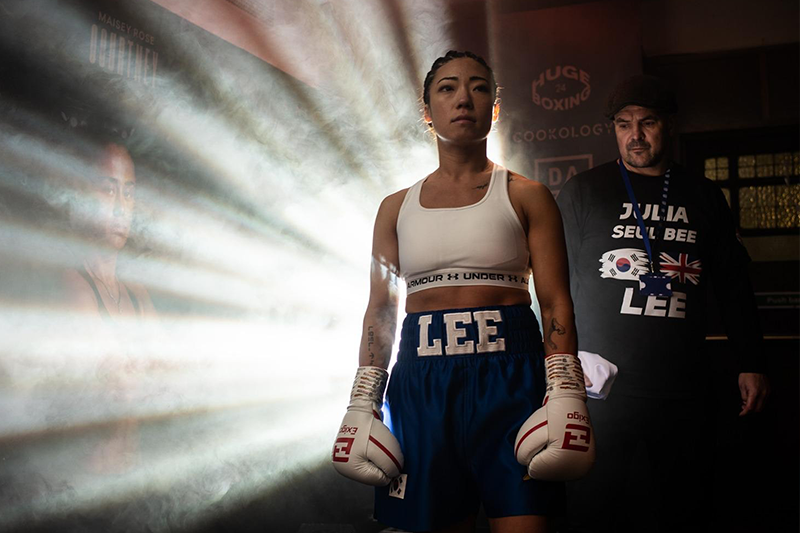
Julia Lee (St Hilda’s, 2009) is a detective constable in the Metropolitan Police, a professional boxer and the founder of Rebels Boxing Gym in Lambeth. After studying Ancient and Modern History at Oxford, Julia spent several years working as a corporate lawyer before moving into policing and returning to boxing, a sport she had loved as a student. A three-time National Amateur Champion representing the Metropolitan Police, she turned professional in 2024 and now works closely with young people through boxing, using the sport to build confidence, discipline and opportunity.
We caught up with Julia to talk about her journey, from discovering competitive boxing at Oxford to coaching young people in London today.
What made you apply to Oxford, and how has your time there shaped you – is there anything you particularly miss?
In my final year of high school, I had applied to a number of US and UK universities (I attended an international high school). At the time, I hadn’t been to either of the two countries, and if I am frank, I just wanted to get into the ‘best’ universities out there – what more could I want?
Given that I wanted to read Ancient and Modern History, and with Oxford being one of the oldest universities in the world, I thought, what better place to study History than where I would be living and breathing history? (Plus, they make dictionaries – they must know what they’re doing!)
I learned to be who I am during my time at Oxford.
Overnight, I had all the freedom and independence I so badly craved as a teenager, and with such an unfettered blank canvas, I could make my own choices to do what I wanted to do, and to be who I wanted to be. I boxed, I danced, I competed in both, I did my own laundry, and met some incredible people.
I miss the buildings, the architecture and, most of all, the smell of old books.
You first discovered competitive boxing at Oxford. What drew you to the sport as a student?
It was pretty much an all-boys’ club at the time, and I liked that I’d be different. I loved the fierceness of it.
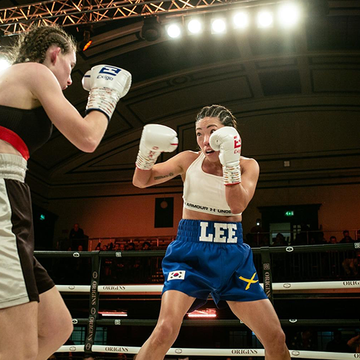
What was your experience of boxing as a student? Did you find a community through it or discover things about yourself along the way?
Boxing at Oxford raised me.
I learned all the fundamentals of boxing from Oxford University Amateur Boxing Club (OUABC). The coaches there at the time – Dave Mace and Greg Kilkenny – taught me all the fundamental techniques and showed me how it feels to give something your all.
There are several moments that are etched in my memory: sprints up the hill on Headington Road, sprints around the track at Iffley Sports Centre, and running up Mount Teide in Tenerife, where we went to train as a club. Nothing – and I mean nothing – at Oxford was as hard as those. I learned to persist, to suffer, to be humble, but to trust my force.
It is funny to think that I did not have much success as a boxer then – in fact, I lost all of my fights. I was young and clumsy. Though I don’t remember the exact how or the why for these losses, I do remember wearing a t-shirt that said ‘ALL I DO IS WIN’ to one of the fights. Boy, was I wrong. Looking back now, it makes me chuckle – when I say I learned to persist and be humble, it comes from a place of pain!
Oxford Boxing also gave me a family – Dave Mace, his partner Fiona and son Harley became my family, and I owe a huge debt of gratitude for the love they gave to a stranger.
You left the sport for some years when you worked as a lawyer. What brought you back to the sport, and how different did it feel the second time around?
Boxing was an unfinished business for me.
There are two types of boxers: those who do boxing, and those who are boxers. I was the latter.
Once you are a boxer, it never leaves you. It is who you are.
I kept fit during my years as a lawyer, and as I toiled away in an office all those years, I always knew in the back of my mind that some time, somehow, I would be boxing again.
When I returned, I was more mature and hungrier. I knew my body better, I knew myself better, I was more seasoned in fitness, and I had nothing to lose.
You now balance life as a detective in the Metropolitan Police with a competitive boxing career. How do those two worlds influence each other?
There is a beautiful synchrony between the two worlds (although if I am brutally honest, ‘balance’ is a generous description!). I work with a lot of young people in difficult situations in my role as a detective in the child exploitation, trafficking and modern slavery unit. I absolutely love my job, but I don’t always feel that it’s enough to ‘disrupt’ crime – there has to be a ‘before’ and an ‘after’, i.e. prevention and rebuilding, to be truly effective. Boxing allows me to fill those question marks.
I have always striven to experience the full spectrum of life, to not remain in a bubble. Both worlds of policing and boxing allow me to do this.
You studied Ancient and Modern History at St Hilda’s. Has your degree influenced you in ways that show up now in your boxing, your police work or your coaching?
What I enjoyed the most about history was probing into why people do the things they do, and how the forces of an age shape the outcome of an influential individual or a group.
I chose the far ends of the ‘Ancient and Modern’ spectrum: ancient Greek civilisations and the Cold War. I studied the unyielding courage of Spartans, the sophistication of Athenian democracy, and the texts of ancient scholars which are scarily relevant today. At the other end of the timeline, I studied the pressures, intrigues, strategies, leadership and ‘group-think’ of Cold War politics. I learned that people do not change, but times do.
The psychological, social and political processes that give rise to historical phenomena and personalities are highly relevant to navigating all aspects of daily life – at a micro-level when dealing with individuals in boxing, policing or coaching, but also at a macro-level when considering the social and political roots of anti-social and criminal behaviour, and the need for broader societal solutions.
Plus, ancient history is just magnificent.
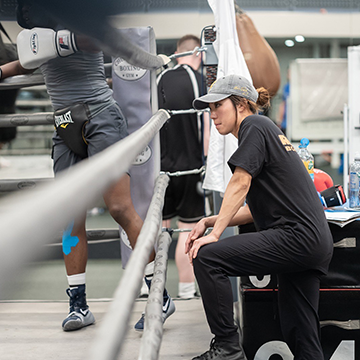
In 2023, you founded Rebels Boxing Gym to provide free training for young people. What inspired you to start the gym, and what impact have you seen so far?
I am solution-driven. I saw a number of hurdles that come with dependence on factors that are outside of my control – public funding, ownership, politics, policies, and even purpose. I sought to solve these, bringing as many of them under the control of, and in alignment with, my vision.
I did not want the consistency of training we provide to be at the whim of some third-party funding, or subsumed under a commercial purpose. I did not want the exposure to boxing to be restricted to only those who could afford a certain amount of money. I did not want to ask for permission of others to give someone the gift of boxing. I also did not want to focus disproportionately on competitive achievements, scaring off people who are still discovering their inner courage.
What we now have is a truly vibrant and diverse family housed under Rebels. We have police officers training with young people from hard-to-reach communities. We are bonded by the common experience of (quite literally) blood, sweat and tears. Boxing is the ultimate equaliser and unifier – it doesn’t matter who you are, what you do, how much you earn – the only currency that counts is the currency of effort.
And amidst all the suffering, we have a lot of fun together.
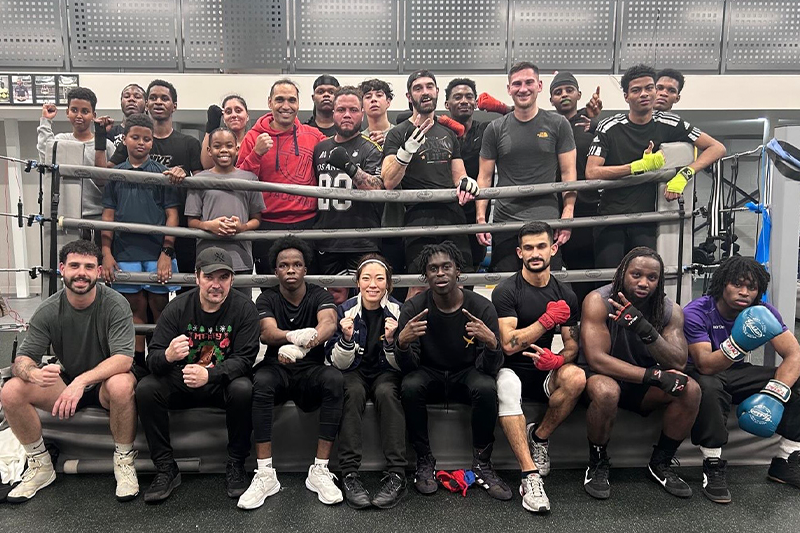
What do you enjoy most about working with young people through boxing, and what are the challenges you see?
I coach because I hope for young (and older) people to experience what I have had the privilege to experience through boxing. I cherish those ‘eureka’ moments when the penny drops and they discover something new, the spark in their eyes when they experience something brilliant, the pride of exhaustion when they break through their ceiling through sheer grit.
You wear a certain armour of self-assurance and pride, once you’ve done it enough times and know what you are capable of. I love seeing young people grow into themselves, witnessing the shift in their aura as they begin to believe in themselves more and more.
Alas, as with anything, you cannot make anyone do what they do not themselves want to do. The toughest shame is when I can see what they are capable of, but they do not give themselves a chance to realise their potential.
Is there a moment in your boxing career that you’re particularly proud of?
It is always the toughest moments that I am most proud of.
I remember this one training session during my preparation for the second national title in 2023, where I had to do 400m sprints. Now, I don’t mind short sprints – 100m, or even hill sprints – you just bite down and it’ll be over soon. I also don’t mind long runs – 12-15km – they are too long to sprint, so you find yourself a decent pace, allow your body to enter into auto-pilot and your mind to wander. But 400m sprints are neither short enough to just ‘bosh out’, nor long enough to dissociate your mind from – they are pure suffering, and you feel every second of it.
After a few reps, I dropped onto my hands and knees, crying and crawling, calling my coach all sorts of names. I had absolute certainty, not a shadow of a doubt, that I could not continue. I was a seasoned athlete by this point, I had done countless sprints, runs, circuits, you name it. I knew my body – I would be injured, I would drop dead, or worse, not make the set time.
Totally unaffected, my coach said ‘time’s up, another lap’ in the most nonchalant manner. I was filled with hatred.
I got up, stumbled forward. I did another lap, under time.
I did not know my limit. It was humbling and empowering, in the most unforeseeable way. What you believe is your limit – even with absolute conviction from years of experience – is not your limit.
It is not the victories that stay with me, but how I got there.
What advice would you give to alumni who want to get involved in coaching or supporting sports in their own communities?
Do not write anyone off – it is often those who don’t ‘fit the bill’ that will surprise you in the most remarkable ways.
What’s next for you?
I plan to die as many times as I can during training, and win as many times as I can in fights. I am always going to give my all to what I do, and if I can be of humble service to some people along the way, what a blessing that will be.
move to carousel movement controls
 Pause slideshow
move to carousel content
Pause slideshow
move to carousel content
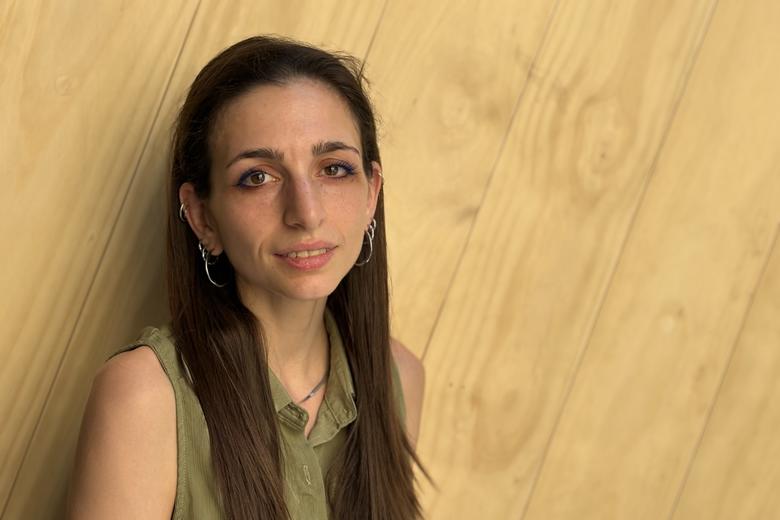
ELLA BARON
ELLA BARON

THE IMPORTANCE OF VACCINE ADVOCACY
THE IMPORTANCE OF VACCINE ADVOCACY

SILICON VALLEY CAREER TALK
SILICON VALLEY CAREER TALK

DEGREES WORTH IT AFTER ALL
DEGREES WORTH IT AFTER ALL

OFF THE SHELF: AUGUST 2026
OFF THE SHELF: AUGUST 2026

THE RISE OF BACTERIAL RESISTANCE FROM POULTRY FARMS
THE RISE OF BACTERIAL RESISTANCE FROM POULTRY FARMS
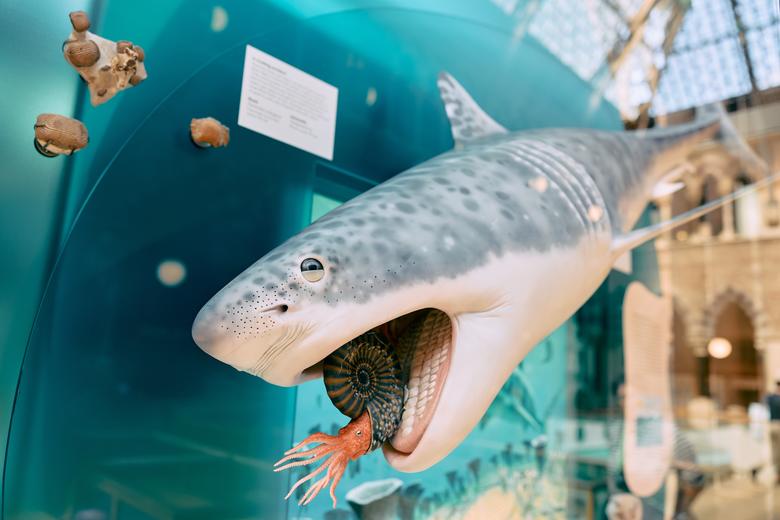
NATURAL HISTORY AT OXFORD REVAMPED
NATURAL HISTORY AT OXFORD REVAMPED

OFF THE SHELF: JULY 2026
OFF THE SHELF: JULY 2026
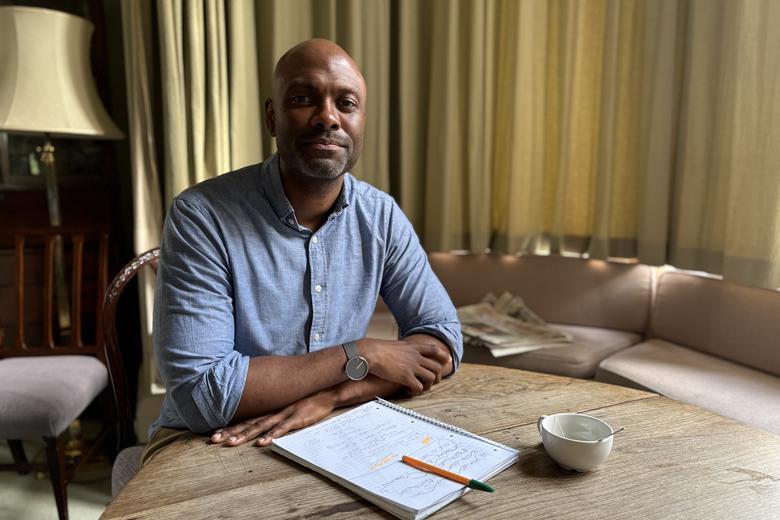
MALACHI MCINTOSH
MALACHI MCINTOSH
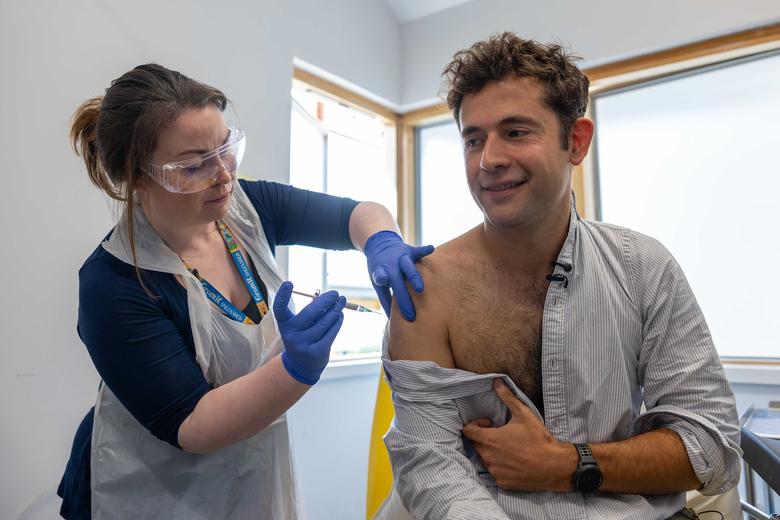
EBOLA: FIRST VACCINATION
EBOLA: FIRST VACCINATION
GRAPPLING WITH THE GHOSTS OF CARIBBEAN COLONIALISM
GRAPPLING WITH THE GHOSTS OF CARIBBEAN COLONIALISM
Pause slideshow

