



OFF THE SHELF: SEPTEMBER 2026
BUBONIC PLAGUE TREATMENT HAILED

Researchers from the UK, including Oxford, and Madagascar, in collaboration with Madagascar’s health services and national plague programme, have conducted the world’s first rigorous clinical trial of treatments for bubonic plague.
The trial found that a ten-day course of an oral antibiotic (ciprofloxacin) is a highly effective and safe alternative to existing treatment with injectable antibiotics requiring hospitalisation.
Plague has scourged humanity for millennia. Though cases have been declining, it remains a high-threat pathogen of pandemic potential. The most common form of plague – bubonic plague – is characterised by swollen, painful lumps, ‘buboes’, along with other symptoms such as fever, headache, altered mental state, and general malaise.

Plague is a highly infectious disease caused by the bacterium Yersinia pestis and transmitted by fleas and their rodent hosts. Human infection occurs from a bite from an infected flea, direct contact with infectious body fluids or tissues of an infected human or animal, or inhalation of infectious respiratory droplets.
Most continents see sporadic cases of bubonic plague every year, with Madagascar reporting approximately 80% of global cases. Bubonic plague is a life-threatening disease with mortality ranging from 15-25%.
The results from the trial, published today in the New England Journal of Medicine, are the outcome of a hugely ambitious clinical trial conducted over the last five years in rural Madagascar.
With many cases occurring in remote villages in the highlands (shown right) and with outbreaks being unpredictable, the team deployed dozens of research assistants, and trained over 230 local doctors and nurses and 1,300 village health workers. The trial was embedded within Madagascar’s national health service and was conducted with the support of the Ministry of Public Health.
Several treatment options are included in the current international and national guidelines, but none of them have been rigorously tested in humans. Regulatory approval has been based solely on data from animal studies and human safety data.
Researchers designed the IMASOY trial to test two treatments for plague. Patients were randomly allocated to receive either a ten-day oral regimen of ciprofloxacin (an antibiotic tablet which can be taken at home), or a regimen requiring three days’ injectable gentamicin followed by seven days’ ciprofloxacin, (with the intravenous (IV) therapy requiring patients to be hospitalised).
450 patients with clinically suspected bubonic plague were enrolled between 2020-24 at 47 sites in 11 districts in Madagascar, and treated with either regimen. Of these, 222 plague infections were confirmed by laboratory testing.
The key findings were that both regimens were found to be highly effective and safe, with overall treatment success rates of about 90% and an overall mortality rate of about 4%. But the big breakthrough concerns the oral antibiotic. A ten-day ciprofloxacin regimen has many advantages over a regimen requiring three days of injectable antibiotics. Mihaja Raberahona, physician at CHU Joseph Raseta Befelatanana and researcher at the Centre d’Infectiologie Charles Mérieux Madagascar says: ‘In Madagascar, where plague cases occur in remote rural locations with limited healthcare infrastructure, taking a straightforward oral antibiotic is vastly preferable to a treatment requiring injections. It alleviates healthcare worker workload and is also much cheaper – costing about one-tenth of the current treatment regimen.’
Piero Olliaro, Professor at the Pandemic Science Institute, University of Oxford and senior author of the study said: ‘Despite its deadly history, we’ve had little clinical evidence on treating bubonic plague – until now. Thanks to the patients and healthcare workers in the trial, we now have real-world proof of effective, safe treatment. Ongoing data analysis will deepen our understanding of the disease, including risk factors, symptoms, and diagnostics.’
The impact of this study is far reaching. As a result of the trial, the researchers will be working with national and international bodies like the World Health Organization (WHO) to provide the evidence that may be required to update clinical guidelines, thereby translating the results into practice and saving lives.
move to carousel movement controls
 Pause slideshow
move to carousel content
Pause slideshow
move to carousel content

ELLA BARON
ELLA BARON

THE IMPORTANCE OF VACCINE ADVOCACY
THE IMPORTANCE OF VACCINE ADVOCACY

SILICON VALLEY CAREER TALK
SILICON VALLEY CAREER TALK

DEGREES WORTH IT AFTER ALL
DEGREES WORTH IT AFTER ALL

OFF THE SHELF: AUGUST 2026
OFF THE SHELF: AUGUST 2026

THE RISE OF BACTERIAL RESISTANCE FROM POULTRY FARMS
THE RISE OF BACTERIAL RESISTANCE FROM POULTRY FARMS

NATURAL HISTORY AT OXFORD REVAMPED
NATURAL HISTORY AT OXFORD REVAMPED

OFF THE SHELF: JULY 2026
OFF THE SHELF: JULY 2026

MALACHI MCINTOSH
MALACHI MCINTOSH
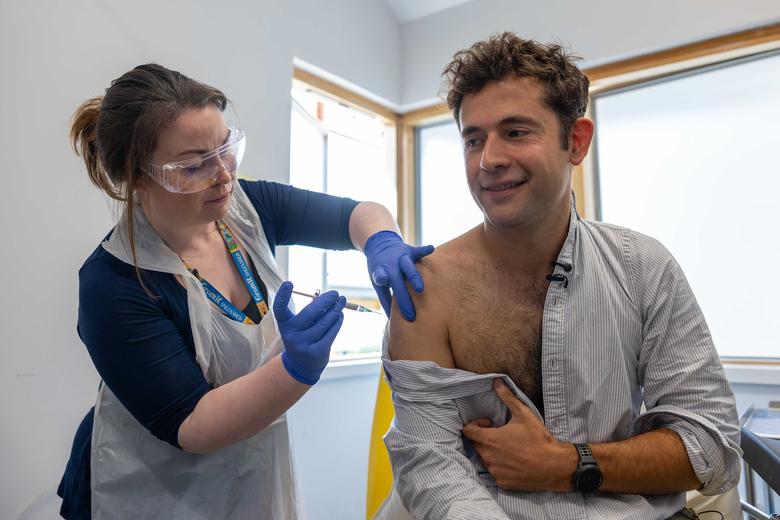
EBOLA: FIRST VACCINATION
EBOLA: FIRST VACCINATION
GRAPPLING WITH THE GHOSTS OF CARIBBEAN COLONIALISM
GRAPPLING WITH THE GHOSTS OF CARIBBEAN COLONIALISM
Pause slideshow

