

HOLLY ELLIS
OFF THE SHELF: NOVEMBER 2025


Goebbels & ‘Total War’: the Sports Palace Speech of 1943 by Peter Longerich (Oxford University Press, 13 November 2025)
A bit like a spectator glimpsing a single pertinent detail in a sporting event that later sheds light on the final score, so this immaculate study of a single speech – rendered here in word-for-word translation parallel with commentary – has the effect of being enormously detailed while illuminating the whole outcome of World War Two. Joseph Goebbels, head of the Nazi propaganda machine, was a raging narcissist and cultivated Hitler’s favour partly by latching onto the anti-Semitism and populist, anti-elite elements of National Socialism. Life was reasonably easy for the propaganda machine until the war began to go wrong for Germany, principally from the autumn of 1942 when Hitler, already withdrawing from public view, began to insist that Stalingrad had been conquered when in fact it was about to be lost. The alarms really began to sound after 19 November when the Red Army counter-attacked. Despite the German 6th Army occupying much of the Russian city, it was encircled in four days, destroying what until then had been a broad narrative of victorious optimism within Germany. This was Goebbels’ moment of opportunity. He wrote the speech to utilise the ‘harder’ atmosphere, justifying extreme measures against perceived enemies, especially Jews, and clamping down on domestic luxuries. By now almost a Hitler stand-in, Goebbels’ idea of ‘total war’ wasn’t new, but in the context of early 1943 he brought it to a new existence. He delivered his speech over two hours, 5-7pm, on 18 February 1943, to a carefully picked audience in the confined, ‘crammed’ theatre of the Sports Palace in a southern district of Berlin. It was received in a curated frenzy yet the author de-mythologises many elements. Reading the speech is today a stark reminder of the degree to which National Socialism was driven by aggrieved populism. It echoes our own age. Just eight days after the speech the Jews of Berlin began to be arrested in their thousands and deported to Auschwitz. Germany had by then embarked on its fateful course, going fully over from military objectives to ethno-nationalist slaughter. ‘Total war’ would result in ‘total failure’.

Under Wide and Starry Skies: 50 Sailing Destinations in Seas Less Travelled by Nicholas Coghlan (Adlard Coles/Bloomsbury, 2025)
A previous contributor to 'Off the Shelf' with Sailing to the Heart of Japan (2024), Nicholas Coghlan has followed up with this most impressive volume, aimed at sailors who might want to push off into deeper waters. Nicholas (Queen’s, 1973) and his partner Jenny (Wolfson, 1973) have, he reminds us, sailed over 70,000 miles at this point, which is rather mind-blowing to the rest of us, whether or not land lubbers. What we get here is an immaculately organised book which pulls off a very difficult feat, of simultaneously telling a narrative that begins with their very first foray into deep water cruising (Isla Guadalupe the destination featured, a Mexican island) but not so as to sacrifice a military level of organisation so that you can scan the contents and see a comprehensive treatment of possible destinations, all over the globe – North Pacific, South Pacific, Indian Ocean and Africa, South Atlantic, North Atlantic and Caribbean. And it’s all covered with such aplomb. Incidents, narratives, stories, people met, lobsters traded, wood carvings acquired, weather and waves. It’s all here in technicolour. But balancing each atoll and island is the hard information section – what, how, where, and whether there are any dangers. So we have a personable encyclopaedia of cruising destinations backgrounded by 40 years of adventurous sailing, fabulously consistent maps and archival photos that bring it all to life. Any other observations? Well yes – the dexterity of a diplomat helps. He addresses the ‘isn’t the world too dangerous’ objection head on. No it isn’t, he insists. Colombia used to be out of bounds but now it’s back on. Venezuela has gone the other way (but is still the final destination of the book, Cayo Herradura, Isla La Tortuga: ‘consult widely if you decide to go’). Change is what happens over time but that is all: do your homework. His maps offer a completely fresh perception of a world full of adventure and open to visitors, and as he points out he hasn’t sailed into Antarctica. He’s not describing life and death adventuring but cruising that anyone can accomplish if they get their sails in order. On the other hand, these are destinations beyond the reach of tourists and charters. So they fall into the category of real adventure. To be fair they did have a hair-raising incident in the Solomon Islands, it should be said.
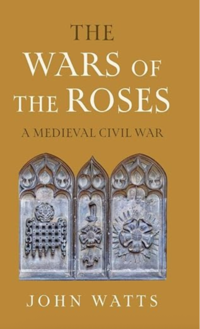
The Wars of the Roses: A Medieval Civil War by John Watts (Cambridge University Press, 2025)
The author is Fellow and Tutor, Professor of Late Medieval History at Corpus Christi College. This elegant volume began as the James Lydon Lectures delivered by Professor Watts just as the Covid pandemic subsided, a not totally irrelevant side note given some of the other political ingredients offered here as the underlying reality of a dispersed, spatially and temporally, civil war premised on an injured polity. Or, as he puts it: ‘once authority broke down, anything could happen.’
Sporadic violence in Britain defined the second half of the fifteenth century. It is terribly difficult to render this to a broad reading public and scholars alike but Professor Watts’ volume comes close with a necessary family tree, a list of important persons and a chronology that begins with Henry VI’s accession to the throne in 1422 and ends with the crowning of Henry VIII in 1509. Above all, it is a comparative approach that lifts its head to ask what was going on in France, and in what sense this actually was a civil war. Professor Watts quotes the poet John Lydgate who was writing about political meltdown in Rome, who recognised that ‘division, once begun, is almost ‘inextirpable’ or ‘irrecuperable’.’ Watts continues, ‘This is the kind of division which became ingrained in the era of the Wars of the Roses: an atmosphere of recrimination and mistrust, indeed of fear.’ It should already be clear why understanding this typically miscomprehended era matters so much in our own era of political frustration and polarity. But Professor Watts only does this by making sense of the Wars of the Roses first, a brilliant achievement as recognised by his peers in this field of historical research.
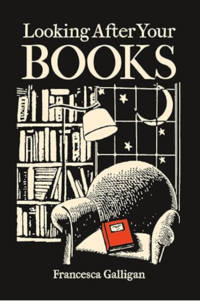
Looking After Your Books by Francesca Galligan (Bodleian Library Publishing, September 2025)
The author is Deputy Head of Rare Books at the Bodleian Libraries, so look no further for expertise where the care of books is concerned. What she has done here is absolutely delightful: create a complete guide for book lovers and collectors, from their acquisition to their care, sprinkled with adroit quotations from the likes of Richard de Bury’s Philobiblon, who wrote for instance that books ranked higher than shoes and should be opened and closed with ‘a mature decorum’. And so forth. At one end advice on buying rare first editions from book fairs; on the other the value of gift inscriptions that become memory markers, the author’s very first A A Milne’s When We Were Very Young, inscribed for her first birthday (!). There is a very sage entry against lending books to ‘friends’. Christmas is approaching; this is a volume that allows you to reconsider the meaning of books, the longevity of books and the treasure of being able to have some that are yours. Strangely, we never stop to ask this simplest of questions so by that measure everyone should own this book alongside all the others.

Recuerde los Pirineos by Ben Sandell (2025, Austin Maccauley)
More World War Two here. 'Remember the Pyrenees' is a fast action romance novella that sees French resistance partisan Jean romance Spanish freedom fighter Maria, who is Jewish and anti-Franco but not (to reassure!) pro-Soviet. They blow up some Nazis, make love in the woods, fall into the hands of the Gestapo and end up in Auschwitz, to survive – just. Has more than a shade of Jonathan Glazer’s The Zone of Interest about it – the film about Auschwitz based on Martin Amis’ book. The Spanish angle –‘lesser explored’ as Sandell (Lincoln, 2003) notes, is to the fore at the start but long gone by the end.

Pets & Their People by Charles Foster (Bodleian Library Publishing, 2025)
This is not like any book you may have read about pets, where you find out how cats scheme and why dogs bark. Instead it’s a rich and often ironic inquiry into human beings and our collective decision (60% in some populations such as the UK) to cohabitate with creatures large and small, at huge financial expense and plenty of fret (AKA ‘pet fret’). Why do we do it? The subject is then rendered as an adventure into a mystery, or as the author (Fellow of Exeter College and exceedingly feted as an author) puts it, ‘Animals and humans are two of the most mysterious things in the cosmos.’ The range and delight of the book is something to behold – there is religion, there is philosophy, there is childhood, there is cultural difference, there are rats and snakes, there is war and work and death. This is a book we should all be reading perhaps even out of a seasonal stocking, and yet it’s no lightweight cracker but a whole education that culminates in an insistence that we are more like newts than the dogs we own.
move to carousel movement controls
 Pause slideshow
move to carousel content
Pause slideshow
move to carousel content

OXFORD'S NEW DEGREE
OXFORD'S NEW DEGREE
SARAH RUDEBECK
SARAH RUDEBECK
OFF THE SHELF: SEPTEMBER 2026
OFF THE SHELF: SEPTEMBER 2026

ELLA BARON
ELLA BARON

THE IMPORTANCE OF VACCINE ADVOCACY
THE IMPORTANCE OF VACCINE ADVOCACY
SILICON VALLEY CAREER TALK
SILICON VALLEY CAREER TALK

DEGREES WORTH IT AFTER ALL
DEGREES WORTH IT AFTER ALL

OFF THE SHELF: AUGUST 2026
OFF THE SHELF: AUGUST 2026
THE RISE OF BACTERIAL RESISTANCE FROM POULTRY FARMS
THE RISE OF BACTERIAL RESISTANCE FROM POULTRY FARMS
NATURAL HISTORY AT OXFORD REVAMPED
NATURAL HISTORY AT OXFORD REVAMPED
OFF THE SHELF: JULY 2026
OFF THE SHELF: JULY 2026
Pause slideshow

