



HOLLY ELLIS
OFF THE SHELF: DECEMBER 2025

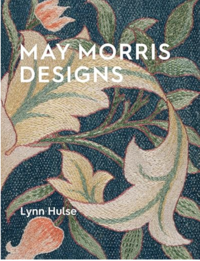
May Morris Designs by Lynn Hulse (Ashmolean, 2025)
This is an exquisite, large but not too large book advancing the case for completely changing our view of May Morris (1862–1938), the daughter of William Morris. The Arts and Crafts designer and art embroiderer was an absolute powerhouse. She obtained extensive mastery of her chosen subject, embroidery, partly from first-hand research, partly from talented practice and partly from a mighty Victorian work ethic. Yet she was all but forgotten until the V&A Museum opened a salvo with an exhibition in 2022, to which this is a resounding reply from the Ashmolean, the author Lynn Hulse deeply involved in both projects. It's important to remember that May Morris rode a big wave during her own life, inextricably allied to her father William Morris’ immense reputation but not as a condition of her own competence. She headed the embroidery department of her father’s business for 12 years, until his death in 1896 – a position of worldly power. But she hugely exceeded it. The Oxford Movement had thrown up a love of the medieval, while there was a swelling desire to ditch lowbrow Victorian commercial aesthetics for something higher and better. We read early on about the growing dislike by the 1860s of so-called ‘Berlin wool work’ where you or I could bang out some embroidery to a pre-made pattern, backed by canvas and threaded by gaudy commercial dye threads. ‘Art embroidery’ replaced it. Pinpointing the revolution was the Special Loan Exhibition of Decorative Art Needlework in London in 1873. May was on another level, several in fact. She fused the past with contemporary, global developments, and lectured widely in North America. Why she was later forgotten is also of interest and not only because of her gender – World War One killed off the Arts and Crafts movement as well as a generation of young men, but so did cultural modernism as it started to disdain craft for a disembodied aesthetic. The lingering spiritual dimension also faltered. The recovery of May Morris is overdue, amidst a broader craft revival. A splendid book, wonderfully illustrated.
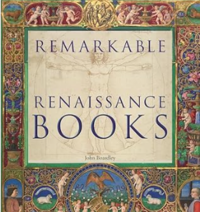
Remarkable Renaissance Books by John Boardley (Bodleian Library Publishing, 2025)
Another beautifully illustrated, large-format book, this handsome volume could illuminate any household at Christmas. What the author John Boardley has done is to tell the stories of 18 outstanding early printed volumes, including Gutenberg’s watershed Bible, a maths book illustrated by Leonardo da Vinci, Galileo’s observations of mountains on the moon, Kepler’s treatise on a supernova and Maria Sibylla Merian’s pioneering studies of metamorphosis. The chronology goes from c.1454 to Merian’s Metamorphosis, published in 1719, so it’s a ‘long Renaissance’, really transitioning to the early Enlightenment. But the strength of that approach is a creeping sense of the world becoming ‘modern’ in its own eyes. The words are spry. This reviewer’s favourite is chapter 10, ‘Unicorns and the Sausage Supper Affair’, concerning the Swiss Conrad Gessner’s illustrated History of Animals (1551-58) in four volumes. It’s what we might call early zoology, using an Aristotelian format but with alphabetic ordering and much comment on the habitats and characteristics of animals. Wonderfully, notes Boardley, Gessner’s cat turned up 400 years later appliquéd to a Gucci sweater; but even better, there were unicorns and other freakish animals in Gessner's encyclopaedia that are illustrated here in full, including strange sea monsters spilling the cargo of hapless ships and their terrified crew. So the book is anti-stuffy and fun and could conceivably attract a younger audience as well.

Ukraine not ‘the’ Ukraine by Marta Dyczok (Cambridge University Press, 2025)
This book forms part of a series that aims to ‘decolonise Soviet history and provincialise the former metropole: Russia.’ However, the timeline for decolonising Russian disinformation is far longer than the Soviet experiment, which only lasted one lifetime. Marta Dyczok (St Antony’s, 1988), now an associate professor in history and political science at Western University, Ontario, writes:
‘Russian historians wrote history in a way that portrayed Kyiv as the cradle of Russian civilisation and Ukrainians as "Little Russians", which continues to shape the way many people think of Ukraine. Ukrainians challenged this historical disinformation war by writing about themselves and asserting their place in the world.’
At that point in the book, she’s not referring to Stalin but to the legacy of Ukrainian poet Taras Shevchenko (1814–61) having just reminded us that Ukraine was colonised by Russia initially under Catherine the Great, beginning with the Crimea in 1783 (then an Ottoman protectorate). All done in just 70 pages, Dyczok has written in effect a primer in Ukrainian history for A-Level students and undergraduates alike. Yet I can’t think of a single well-informed person who wouldn’t secretly want this primer, when the din of propaganda and misinformation is louder than ever. What happened when; who were the Cossacks; why did the Hetman Bohdan Khmelnytsky become a household hero in Ukraine yet blotted his copybook by doing a deal with Moscow in 1654? What was Russia’s game in 1783; after the Russian Revolution; after 1991? Ukraine’s history is as messy as anyone else’s, perhaps more so; but the several centuries of Russian imperialism has worn very thin in 2025 against an invasion of Ukraine that is close now to equalling World War One in duration. A greatly overdue volume that sets out to grind no axe, just to settle the record straight, in not too many words. The cover design is, we guess, drab by design, but does not reference the current attempted destruction of the country. For reference, the Oxford University Press equivalent book is Ukraine, in its ‘What Everyone Needs to Know’ series, by Serhy Yekelchyk. Another excellent volume, but published in 2015 and then in a second edition in 2020. Five years is a long time in recent and current Ukrainian affairs.
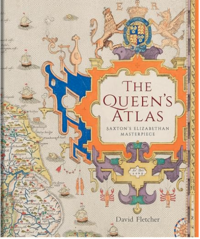
The Queen’s Atlas: Saxton’s Masterpiece by David Fletcher (Bodleian Library Publishing, 6 November 2025)
Just out, this is another superb book by the publishing arm of the Bodleian Library, larger format and lavishly illustrated. The author’s premise is that today we take for granted maps and mapping, not least because of our smart phones and GPS mapping apps. Go back to mid-Tudor England and maps were rare, but sought-after for myriad reasons, especially the projection of political and economic power by the Tudor state. A farmer from the West Riding of Yorkshire, Christopher Saxton, became the first cartographer to publish an atlas of all the counties of England and Wales, and he did it in 1579. Fletcher argues that this was a watershed moment and it is hard to disagree. By mapping the realm Saxton unified it visually, politically, economically and geographically. The enormous labour represented a synthesis of art and science, the quality of the work was very good and the resulting maps formed the basis of everyone else’s maps for nigh on two further centuries. The 'Ditchley portrait' of Queen Elizabeth I (c.1592) has her standing on a map of England. The author adds, ‘Saxton’s maps have entered the popular imagination as the image of the country.’ Bang in the middle of the volume is a double-page spread of a small abstract of a gigantic tapestry map showing part of Worcestershire commissioned by Robert Sheldon in the 1580s and owned by the Bodleian Library and recently conserved. It is simply incredible even in printed reproduction, for its detail and its wonderful place names and lavish depiction, villages such as Hilchrome and Kinastoncha and The Worldes End.

Mapping the North: Myth Exploration Encounter by Carlotta Forss (Bodleian Library Publishing, 2025)
There’s a theme here, once again engaging the Bodleian Library map collection. The author, who had a Bodleian fellowship in 2018–19, writes: ‘Beginning in classical antiquity and ending in the early twentieth century, the book is a long-term history of a concept – the north – and how it has manifested on maps.’ Maps were scientific yet they projected ideas too, so again the idea that they are a meeting point for art and science. The author is a specialist in the European early modern period (c1450–1750) and readily acknowledges the impact of that here on her choice of sources. A bit like Gessner’s animal encylopedia, there be monsters in the 1539 Carta Marina by Olaus Magnus, a theologian who was trying to impress the Papacy with the potential value of the Nordic countries in reversing the Reformation. A swede, he was swimming against the tide, yet his map is a delight. 300 years later Sir John Franklin’s 1845 expedition inspired some remarkable marine paintings showing the graceful HMS Erebus dwarfed by icebergs, the entire 129 crew of two ships destined to perish. The idea of the north was at least as powerful as the reality, probably more so; readers could do worse than curl up by the log burner with a glass of port to enjoy this very original work of illustrated history. The cover image is stunningly evocative of a landscape cast down the ages as a thrilling, romantically sublime land of discovery and peril.

Energy Storage: Driving the Renewable Energy Transition by Efstathios E Michaelides (CRC Press, 2025)
Just after much-derided COP30 why not try this work by alumnus Stathis Michaelides (St John’s, 1974), currently Professor and W A Tex Moncrief Chair of Engineering at the Department of Engineering, Texas Christian University in Fort Worth, Texas. The book is intended for undergraduate and graduate students taking courses in energy conversion, sustainability, renewables and energy storage, and energy transition, but we rather like such books for their straightforward approach in an age of mirrors and marketing (if not their steep pricing, but libraries are there for a reason). We approached the author for a post-COP30 comment and he replies:
‘The International Energy Agency and the Conference of Parties have set lofty goals to avoid a climate crisis and decarbonise the electricity generation sector. However, all of us ask the question: "How do I run my home appliances (and my air-conditioner) on a calm night, when neither wind nor solar irradiance generate electric power?" The answer is the development of regional and local energy storage systems that can support the grid when renewables cannot.’ On this and so much more, seek out this volume and (perhaps) gaze above some of the newspaper headlines of doom and gloom. ‘Using the basis of thermodynamics, the book explains the operation and features of all the available energy storage methods that may be used for the transition to renewable energy. It describes the several types of energy storage options available, their advantages and disadvantages, and their practical applications.’
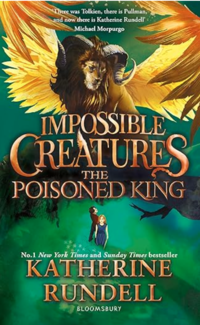
The Poisoned King by Katherine Rundell (Bloomsbury Children’s Books, 7 September 2025)
Currently a fellow at St Catherine’s College, Katherine Rundell has punched straight through to the best-seller lists with her series of Impossible Creatures books that fall somewhere across the Middle Earth-to-Narnia tradition that is so very Oxford, and still claims to occasionally steal out upon forbidden rooftops at night, a nod to her former berth at All Souls.
In The Poisoned King, which only came out in September and will therefore presumably be in plenty of Christmas stockings, Christopher Forrester is unexpectedly woken by a miniature dragon chewing on his face, and his heart leaps for joy. For months he's dreamed of returning to the Archipelago – the secret islands where all the creatures of myth still live. But he did not know it would involve a rescue mission on the back of a sphinx, or a plan to enter a dragon's lair. Nor did he imagine it would involve a girl with a flock of birds at her side, a new-hatched chick in her pocket and a ravenous hunger for justice...
A book with values and wonder alike, it is declared for 8-12 year olds yet like so many great books of this sort it will appeal to the adults as well – not forgetting all the Renaissance publications we’ve peered at in this month’s 'Off the Shelf', maps and books populated by imagined creatures as much as real ones. Michael Morpurgo says it all when he declares, 'There was Tolkien, there is Pullman and now there is Katherine Rundell.' But in another sense Rundell is not unlike Conrad Gessner in the age of climate change and literalism, when wonder is needed as an adjunct of value.
move to carousel movement controls
 Pause slideshow
move to carousel content
Pause slideshow
move to carousel content
OXFORD'S NEW DEGREE
OXFORD'S NEW DEGREE
SARAH RUDEBECK
SARAH RUDEBECK
OFF THE SHELF: SEPTEMBER 2026
OFF THE SHELF: SEPTEMBER 2026
ELLA BARON
ELLA BARON

THE IMPORTANCE OF VACCINE ADVOCACY
THE IMPORTANCE OF VACCINE ADVOCACY
SILICON VALLEY CAREER TALK
SILICON VALLEY CAREER TALK

DEGREES WORTH IT AFTER ALL
DEGREES WORTH IT AFTER ALL

OFF THE SHELF: AUGUST 2026
OFF THE SHELF: AUGUST 2026
THE RISE OF BACTERIAL RESISTANCE FROM POULTRY FARMS
THE RISE OF BACTERIAL RESISTANCE FROM POULTRY FARMS
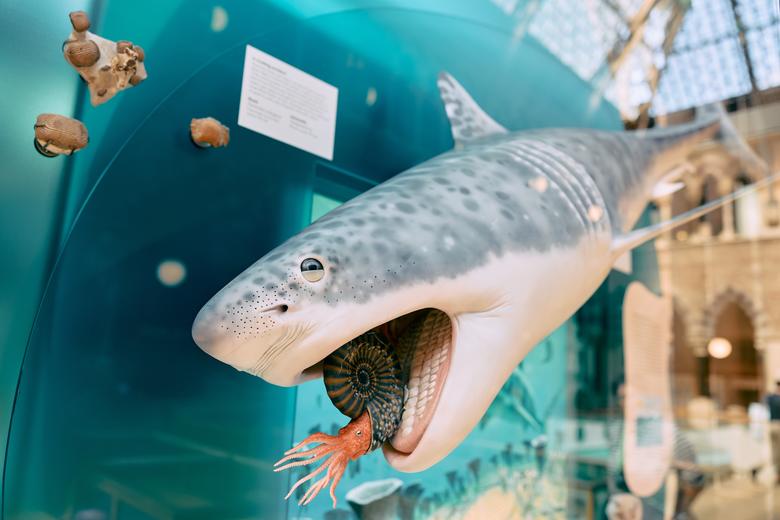
NATURAL HISTORY AT OXFORD REVAMPED
NATURAL HISTORY AT OXFORD REVAMPED
OFF THE SHELF: JULY 2026
OFF THE SHELF: JULY 2026
Pause slideshow

