

HOLLY ELLIS
OFF THE SHELF: AUGUST 2026

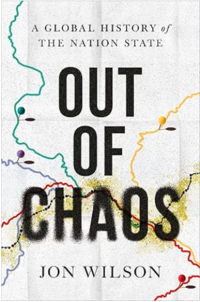
Out of Chaos: A Global History of the Nation State by Jon Wilson (Oxford University Press, 27 August 2026)
What a book! The author (Wadham, 1991) covers a vast terrain over 400 pages and somehow retains control of his material, the core idea being that very quickly and unexpectedly, the nation state emerged as the de facto unit of global societal organisation in the mid-twentieth century. Three maps do the essential work. The world in 1920 is one of empires, albeit a recently, violently-altered latticework of influence following the Great War’s winners and losers. Then, between 1920 and 1965, there were simply vast numbers of border changes, the end of empire, temporary occupations and changed sovereignties, World War Two in the middle. From 1965 to 2020? Almost nothing happens, the handover of Hong Kong being a mere breadcrumb relic of the earlier decolonisation, not to diminish the anguish of the matter for individuals who found themselves on the wrong side of the Chinese state. What else is there to say? We should all read the book. What constitutes the nation is a very unstable idea indeed, even for self-proclaimed nationalists. The balancing act of that mid-twentieth century phase was the rise of global society and universalism – the UN for instance, but also the first true World Cup, won by Uruguay, in 1950. Lots of nations but some shared universal values. In the case of the Soviet Union and China, it was a similar recipe with Bolshevism/Socialism as the ‘shared values’, and maybe a cynical nod to the UN or the World Cup or the Olympics, but no doffing of the cap. Recent scholarship has sought to dismantle over-enthusiastic ‘here comes the nation state’ narratives such as when we learned at school about German unification. Nothing was inevitable or linear, argues Wilson. The book starts with empires, moves on to Federations, civil wars, the UN, Soviet stuff, collapse of empire, partitioning, all the glorious new nations coming into their own, and thereafter the messy realities of an increasingly connected global economy defined by multipolarity. That overview does nothing to confer the nimble majesty of this volume. The author moved to an academic post in Singapore during the writing, another unlikely nation described with gusto and usefully brought to bear towards the end. But the gold is to be gleaned by careful reading. Wilson is very good on the turbulent 1970s and origins of neo-Liberalism that both was and wasn’t the reassertion of a form of sovereignty at a time when so many nations had appeared to become ungovernable. The author contests that three responses can be discerned to ‘unmanageable pluralism’. One is the ‘assertion of violent central sovereign control over certain spheres of life’. A second is institutionalisation (he has in mind partly Pinochet’s Chile, in turn inspired partly by Franco’s Spain); a third is ‘to embrace decentralisation and social fragmentation as a better form of democracy, even at the expense of greater social coordination’. The first is Farage sending the Navy into the Channel and the last is Andy Burnham’s devolution. The second might be an exaggerated version of the Tories under Kemi, but who knows. The author is far too subtle to dabble in such detail, and Britain's role in this global book is essentially as a legacy, with Brexit as further evidence of relegation.
Trump after Greenland, Xi after Taiwan, Putin after Ukraine and Netanyahu after Gaza, plus everyone and the UAE especially after Africa and then again Thailand and Cambodia questing for regional ascendency. This is a resurgent form of trans-nationalism that both is and isn’t like earlier patterns of regional influence and formal empire. Ultimately, Professor Wilson wants us to be more realistic, more flexible in our thinking. The nation states that sprang up did not resemble their neatly drawn cartographic borders, as taught to children. ‘Most were porous, lacked the power they claimed, and were vulnerable to challenging forces from the start.’ But the generative myth continues: the congruence of people, territory and power. Elusive though it may be, the nation state keeps reasserting itself.
*Jon Wilson is Dean, College of Humanities, Arts and Social Sciences and Tan Kah Kee Professor at Nanyang Technological University
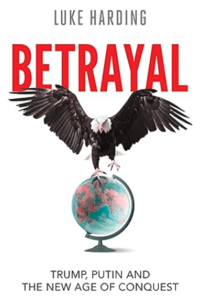
Betrayal by Luke Harding (Guardian Faber Publishing, 27 August 2026)
Not a bad bedfellow to Out of Chaos, this time with a greater sense of possessing a ringside seat to history unfolding in front of our eyes, care of one of Oxford’s great journalists and a previous friend of QUAD. Betrayal charts the dramatic collapse of the post-1945 international system. The agreement that nations do not change borders by force is under attack, not just from Russia but America, too. Donald Trump has threatened to seize Greenland and bombed Iran as part of a violent remaking of the Middle East. Vladimir Putin’s bloody imperial campaign to seize Ukraine and redraw Europe’s map continues. Meanwhile, China eyes up Taiwan. Written in thrilling style, this vital and clear-eyed book reports from the frontlines during an age of upheaval. Luke Harding (Univ, 1987) visits villages in eastern Ukraine under Russian bombardment, talks to Greenlanders about a US takeover, tours the divided Korean peninsula and sits down with Volodymyr Zelenskyy. He examines why Trump appears to be in thrall to Putin and tracks Russian spies and their links with Nigel Farage’s Reform party. Betrayal is an essential guide to brutal Great Power politics and how it came back, and we’re hoping to sit down with Harding to discuss it more, anon.
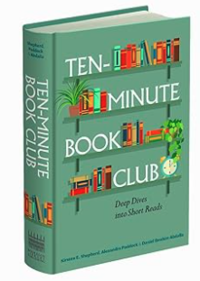
Ten-Minute Book Club: Deep Dives into Short Reads by Kirsten E. Shepherd, Alexandra Paddock and Daniel Ibrahim Abdalla (Bodleian Library Publishing, 9 August 2026)
An alumni survey conducted by the English Faculty at Oxford saw former students enthusing about ‘certain passages they hung onto’, reflected in this anthology of 90 short texts, says lead author Kirsten Shepherd, Professor of English and Theatre Studies at Oxford and a Fellow of St Catherine’s College. The other stimulus is LitHits, a newsletter that has been sent out every Friday for the past five years, with a devoted following. Co-collaborators in this venture are Alexandra Paddock and Daniel Ibrahim Abdalla, respectively Lecturer in Old and Middle English at Keble College, and Lecturer in English Literature at the University of Liverpool. All three are Oxford alumni/ae. Part of the magic of the book is the diversity of texts. It will be an exceptionally polymathic reader who can truly claim to know all these authors, from big hit names such as Shakespeare, Chaucer, Eliot and Proust to Aphra Behn, Countee Cullen, Harindranath Chattopadhyay and Sojourner Truth. The volume is not just a compilation of faves. A brief intro situates the text, which might be as brief as 18 lines – as in the case of Chaucer. Then a small paragraph, ‘What We Love…’, then a bit about Chaucer, and then the all-important ‘Where to Next’ where elements are related to TS Eliot’s The Waste Land, Herman Melville, Patience Agbabi and Giovanni Boccaccio. It is these myriad connections that reflect the deep work of the authors, in a richly human book without AI. In the background development, going back to the initial LitHits in 2018, was a burgeoning awareness of the emerging, savage competition with book reading in the form of smart phone distraction. In academia this has led to a broader discussion resulting in the word ‘hypertextual’. If you read a book, hit a word or name you want to know more about, the chances are you hive off into your phone and a quick web search. In fact we were always diving off like this to a cross reference or a newspaper or another book, some readers more than others, in the past. Kirsten mentions Will Self telling the Guardian that he was enjoying having 50 different books on the go at once. Kirsten says: ‘we read in a whole new way now, not necessarily less.’ She adds that there is a cool book by Leah Price called What We Talk About When We Talk About Books, adding, (hurrah!) that Leah is also inbound as the new Professor of Bibliography and Book History at Oxford. Originally designed as an app, the authors didn’t find the cost implications of maintaining remotely sustainable and this coincided with a discussion with Bodleian Library Publishing. The result is a rather marvellous hybrid of human ingenuity, literary appreciation, a paper book form and an AI-free web of connection.
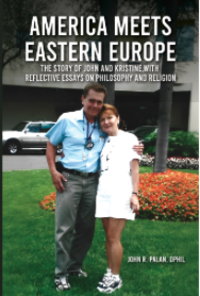
America Meets Eastern Europe: The Story of John and Kristine with Reflective Essays on Philosophy and Religion by John and Kristine Palan (21 July 2026)
This dual autobiography is a terrific record of what now feels like a different era, whether it's Ohio in the 1950s, or Europe in the 60s and in the restrictive Soviet sphere of the Cold War. John (Merton, 1971) began in a seminary and attained his BA in Philosophy and Classics at Duquesne University, Pittsburgh, in 1965, cum laude. But he didn’t bed down straightforwardly in the Greek Catholic church, noting with humour that the services were sung and he couldn’t sing in tune. He went to study at the Catholic University in Louvain, Belgium. The account of his extensive European travelling and acquisition of several languages shows that he was very serious about his religious and philosophical inquiries, his eventual Oxford thesis at Merton 'The Theory of Religious Knowledge of Vladimir Soloviev', a late 19th-century Russian philosopher. His own heritage and family were from the small Carpathian town Veliki Bereznii in Ukraine, then of course Soviet. Kristine’s story moves from her birth in Vishlanka in NE Slovakia to Western Ukraine, through a typically ham-fisted Soviet relocation policy that rested on the forced eviction of a Polish family who came back to rob Kristine’s family and burn their crop. That’s worth mentioning here because the whole book exudes a love of life, yet a reminder of how contingent everything is, and how flexible and determined you have to be to succeed. Married in Presov on 1 August 1973, the couple moved to Salina Kansas where John attained his first teaching post as a young academic. Kristine didn’t speak English but learned. Later, they spurned both big city and small town life and moved to the place they wanted to be, Colorado Springs, on the pragmatic view that John’s career would follow. It did, but he had to get a role as a Wendy’s burger restaurant manager to attain a mortgage. The book ends with essays on religion and philosophy, towards ‘reverence toward nature without theism’. Any current or recent leaver from Oxford would profit from the book, but it holds a wider resonance as a historical account. The many instances in which John, as a young man, slept on a park bench in Greece or met and befriended a hermit here, a friend there, got around on a motorcycle until it broke; this echoes many memoirs of the 1960s. Such a venturesome attitude to life is still possible.
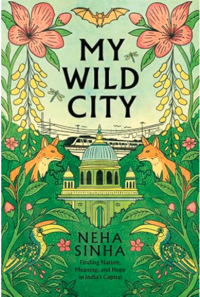
My Wild City: Finding Nature, Meaning, and Hope in India’s Capital by Neha Sinha (Chelsea Green Publishing Co, 1 September 2026)
Published in India under the title Wild Capital: Discovering Nature in Delhi, My Wild City is a carefully crafted journey into ecological memory in perhaps the least obviously wild place in the world, the teaming metropolis of Delhi, the greater definition of which houses in the region of 35 million inhabitants. Sinha (Mansfield, 2010) finds wild creatures, ecological histories and a deep sense of meaning that bind us to the places we call our own. In one sense she challenges readers – when did you last roll in hay or admire a flower, or stop to watch a firefly? She is aware of the daunting subject of finding human purpose in a rapidly warming, hostile world. On 10 July, under the auspices of the Oxford & Cambridge Alumni network India, a discussion of the book was held at the India International Centre, the panellists including fellow alumnus Mr Gautam Bhatia (Balliol, 2011). None other than Robert Macfarlane writes: ‘A bold and glorious book about humans, cities and the wild lives of the beings – from fireflies to rivers – with whom we share the habitats we have built. It is brilliantly crafted at the level of the sentence and image, adventurous in its forms and tones, and its themes – memory, love, loss, care, value – are as embracing and urgent as they come. It’s magnificent.’
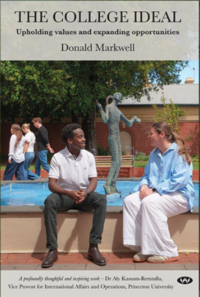
The College Ideal: upholding values and expanding opportunities, by Donald Markwell (Wakefield Press, 30 July 2026)
The author Don Markwell matriculated to Trinity in 1981, while at the book launch event in Adelaide, Australia, former Rhodes Scholar Oliver Douglas (Merton, 2024) presented the volume. The College Ideal sets out and reflects an important ideal in higher education – the value of residential university colleges for providing students with the best possible all-round educational experience. Focusing on the recent experience of St Mark’s College, Adelaide, but with lessons of global relevance, it highlights the profound and positive impact of collegiate education that upholds key values, and expands opportunities for students of potential from diverse backgrounds. At a time where a pervasive global theme is sky-high housing costs driving many students to seek to stay at home, there could not be a timelier moment to pause and celebrate the whole package offered by higher education to young adults.
move to carousel movement controls
 Pause slideshow
move to carousel content
Pause slideshow
move to carousel content
OXFORD'S NEW DEGREE
OXFORD'S NEW DEGREE
SARAH RUDEBECK
SARAH RUDEBECK

OFF THE SHELF: SEPTEMBER 2026
OFF THE SHELF: SEPTEMBER 2026
ELLA BARON
ELLA BARON

THE IMPORTANCE OF VACCINE ADVOCACY
THE IMPORTANCE OF VACCINE ADVOCACY
SILICON VALLEY CAREER TALK
SILICON VALLEY CAREER TALK

DEGREES WORTH IT AFTER ALL
DEGREES WORTH IT AFTER ALL
THE RISE OF BACTERIAL RESISTANCE FROM POULTRY FARMS
THE RISE OF BACTERIAL RESISTANCE FROM POULTRY FARMS

NATURAL HISTORY AT OXFORD REVAMPED
NATURAL HISTORY AT OXFORD REVAMPED
OFF THE SHELF: JULY 2026
OFF THE SHELF: JULY 2026
MALACHI MCINTOSH
MALACHI MCINTOSH
Pause slideshow

